Trolling Speed for Togue on Rangeley Lakes
Navigating the vast, deep waters of the Rangeley Lakes in pursuit of togue, also known as lake trout, can feel like a game of hide-and-seek where the fish hold all the clues. Many anglers get frustrated wondering if they’re using the right lures, fishing at the correct depth, or most critically, trolling at the perfect speed. This comprehensive guide will pull back the curtain on the art and science of finding that elusive sweet spot for trolling speed to consistently entice Rangeley’s togue, ensuring your next trip is more fruitful and less perplexing.
Understanding Togue Behavior and Trolling Fundamentals on Rangeley Lakes
Togue are fascinating fish, creatures of habit that thrive in specific conditions. To successfully troll for them on Rangeley Lakes, you first need to understand their preferred environment and how your equipment helps you meet them there.
The Deep-Dwelling Nature of Togue
Togue are true cold-water specialists. Unlike some other trout species that might venture into warmer shallows during certain times, togue consistently seek out the frigid depths, especially as the surface waters of Rangeley Lakes warm up through late spring and summer. They are typically found in water temperatures ranging from the mid-40s to low-50s Fahrenheit, which means they’re often hugging the bottom of deeper basins or suspended over structure well below the thermocline.
Their primary diet in Rangeley Lakes largely consists of baitfish like rainbow smelt and sometimes cisco. Understanding this is key because your trolling speed and lure choice should aim to mimic these natural food sources. A stressed or injured baitfish moves differently than one leisurely cruising, and togue are opportunistic predators, often targeting the easiest meal. Knowing that they are primarily sight-feeders in relatively low-light conditions at depth means your lure's action and visibility at certain speeds become paramount. If you want to know more about the target species, check out our guide on Where Togue Live in Deep Maine Lakes.
Essential Gear for Trolling Rangeley Lakes
Before you even think about speed, having the right setup is non-negotiable for effective togue trolling on Rangeley. These fish often inhabit depths that require specialized gear to reach and present your lure effectively.
First and foremost, you'll need a stout trolling rod that can handle the resistance of deep-diving lures or the drag of lead core or wire line, yet still have enough sensitivity to detect subtle bites. Pair this with a reliable line-counter reel. This reel is an absolute game-changer, allowing you to consistently reproduce the exact amount of line you've let out, which directly correlates to your lure's depth at a given speed. Without it, you're guessing, and guessing rarely leads to consistent success with deep-water togue.
For getting down to where the togue live, you have several options: downriggers, lead core line, or heavy wire line. Downriggers offer the most precise depth control, allowing you to instantly adjust your lure's depth. Lead core line, with its distinct color changes every ten yards, provides a good visual indicator of depth and allows for a more subtle presentation. Wire line, being thinner and denser, cuts through the water with less resistance, achieving greater depths with less line out. Each method has its pros and cons, and understanding How to Use a Downrigger for Lake Trout can greatly enhance your precision. The choice depends on your preference and the specific conditions you encounter, but having at least one of these deep-water presentation methods is critical.
Optimal Trolling Speed Ranges for Togue on Rangeley Lakes
Now that we understand the togue's world and the tools to reach it, let's dive into the heart of the matter: finding that ideal trolling speed on the Rangeley Lakes. It's less about a single number and more about a range, adaptable to conditions.
The "Sweet Spot" for Togue Trolling
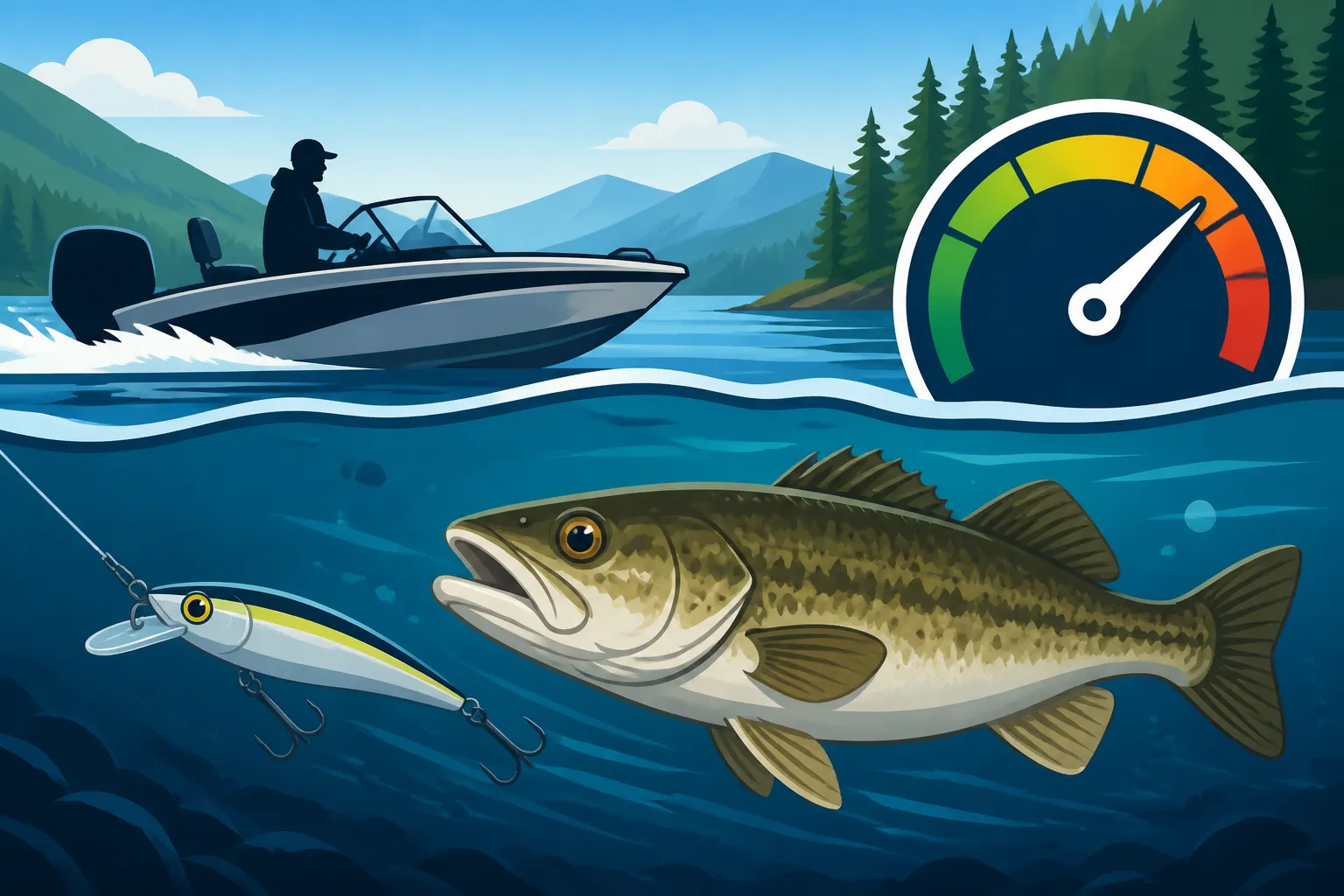
Generally, the sweet spot for trolling speed when targeting togue on Rangeley Lakes falls within the range of 1.5 to 2.5 miles per hour (mph). This speed range is effective for a couple of key reasons. Firstly, it accurately mimics the movement of natural baitfish like smelt. Smelt, when healthy, dart and glide, but when injured or disoriented, their movements become more erratic and slower, often presenting an easier target for a predator like a togue. Your lure, when trolled at this speed, will often exhibit the subtle wobbles and flashes that trigger a togue's predatory instinct.
Secondly, this speed allows your lure to maintain its intended action. Many spoons, plugs, and stickbaits are designed to perform optimally within this velocity window, giving them that enticing, fish-attracting swim. Too slow, and the lure might simply drag lifelessly; too fast, and it might spin unnaturally or blow out, losing its fish-enticing qualities. It's a fine balance, and maintaining consistent boat speed through varying conditions is paramount.
Adjusting Speed Based on Season and Water Temperature
While 1.5-2.5 mph is a solid starting point, the specific season and the exact water temperatures where the togue are holding will necessitate adjustments. Togue, like all cold-blooded creatures, have a metabolism that slows down significantly in colder water and speeds up slightly in warmer water.
In the early spring, immediately after ice-out, and again in the late fall, when the entire water column is much colder, togue can be sluggish. During these times, their feeding activity might be less aggressive, and a slower trolling speed, often closer to the 1.5 mph mark, can be more effective. This slower presentation allows a less active fish more time to react and commit to striking your lure. For a broader understanding of seasonal fishing, refer to our Best Time of Year to Catch Togue in Maine guide.
Conversely, during the peak of summer, when togue are relegated to the deepest, coldest sections of Rangeley, they might be slightly more active within their preferred thermal band. Even though they are deep, the overall warmer environment can lead to a slight uptick in their metabolism. In these conditions, you might find success by bumping your speed up towards the 2.5 mph range, allowing for a more aggressive lure presentation that can provoke a reaction strike. Always remember to prioritize the fish's activity level and the water temperature at their depth, not the surface temperature, when making these adjustments.
Factors Influencing Your Trolling Speed Adjustments
Trolling isn't just about setting a speed and forgetting it. A skilled angler constantly evaluates conditions and makes nuanced adjustments. On a dynamic body of water like Rangeley Lakes, understanding these influencing factors is key.
Baitfish Imitation and Lure Action
The specific lure you're pulling plays a huge role in determining your optimal trolling speed. Different lures are designed to perform best at different speeds, and your goal is always to get the most natural, enticing action out of your chosen presentation. For a wide selection of choices, consider guides like Best Lures for Maine Open Water Fishing.
- Spoons: Classic trolling spoons, like those from Mooselook or Gene Larew, are often highly effective for togue. They are designed to wobble, flutter, and flash, mimicking an injured baitfish. These usually perform well in the 1.5 to 2.5 mph range. Go too fast, and they might spin or lose their characteristic flutter; too slow, and they might just "swim" without much flash. Watch your rod tip to observe the lure's action; a good wobble should be visible.
- Plugs and Stickbaits: Hard-bodied plugs or stickbaits, such as Rapalas or similar designs, have a built-in wobble or darting action. These often require a slightly faster speed, maybe 2.0 to 3.0 mph, to get their full, intended action. However, some can be effective at slower speeds if they have a wider wobble. Experimentation here is crucial to see how the lure behaves behind your boat.
- Flies/Streamers: When trolling fly patterns or streamers, often behind a dodger or flasher, you're usually aiming for a slower, more deliberate action. The dodger creates the primary attraction, and the fly trails behind, resembling a small baitfish trying to escape or a bug. Speeds closer to the 1.0 to 2.0 mph range are typical for this setup, allowing the fly to undulate enticingly.
Ultimately, it’s about watching your rod tip and, if possible, observing the lure's action in clear water near the surface before you send it down. Each lure has a sweet spot, and your job is to find it.
Wind, Current, and Boat Control
Rangeley Lakes can be a large, open body of water, and wind can be a significant factor. What your boat's speedometer says can be very different from your lure's actual speed through the water.
- GPS Speed is King: Always rely on a GPS-based speed reading rather than your boat's paddle wheel or pitot tube speedometer. GPS measures your true ground speed, which is a much more accurate representation of how fast your lures are moving relative to the fish.
- Wind and Waves: Trolling directly into a strong headwind will make it harder to maintain a slow speed, as your engine will have to work harder, and your boat might surge. Conversely, a tailwind can push your boat faster than your engine speed suggests. Crosswinds can be particularly challenging, making it difficult to keep a straight line and consistent speed. When encountering chop, your boat will naturally slow down and speed up with each wave, causing your lures to surge and stall. This can sometimes be a trigger, but often it's better to try to maintain as steady a pace as possible by making small, constant adjustments to your throttle and steering.
- Subsurface Currents: While less common on inland lakes, strong winds can sometimes create subsurface currents that affect your lure's depth and speed. Paying attention to your line angle and how your downrigger balls are tracking can give you clues. Sometimes, a slight S-turn maneuver can vary the speed of your outside lures, which can be a key trigger.
Fish Activity and Strike Indicators
The fish themselves are your ultimate guide. Trolling is a constant feedback loop. If you're not getting bites, something needs to change.
- Lack of Strikes: If you've been trolling at a consistent speed and depth for an extended period without any action, it's a clear signal to experiment. Before changing depth or lure, try incrementally adjusting your speed. Start by slowing down by 0.2 mph, then after a few minutes, speed up by 0.2 mph. Sometimes, that slight variation is all it takes to trigger a bite from a following fish.
- The "S-Turn" Technique: This is a classic trolling maneuver for a reason. By making gentle, sweeping turns (S-turns), your outside lines speed up and rise slightly in the water column, while your inside lines slow down and drop. This change in speed and depth can be incredibly effective at provoking a strike. Often, fish will hit as your boat comes out of a turn and the lures resume their steady path.
- When They Hit: Pay close attention when a fish strikes. Was it during a speed change? At a particular speed? What was the weather doing? Keeping a mental (or even better, written) log of these details can help you identify patterns and replicate success.
Remember, every day on Rangeley Lakes is different. What worked yesterday might not work today. Be flexible, be observant, and be willing to experiment.
Practical Tips for Dialing In Your Togue Trolling Speed
Finding that perfect trolling speed for togue on Rangeley Lakes is a blend of science and art. It requires attention to detail, the right tools, and a willingness to learn from every moment on the water.
Monitoring Your Speed Accurately
As mentioned earlier, a reliable GPS unit is your best friend for monitoring trolling speed. Integrated into most modern fish finders and chartplotters, a GPS receiver gives you real-time feedback on your speed over ground. This is critical because conditions like wind and current can drastically alter your boat's speed through the water compared to what your engine rpms or a traditional pitot tube might indicate. You want to know your true speed, not just your propeller speed.
Many anglers use units like those from Humminbird or Garmin, which provide clear digital readouts of your speed. Pay attention to decimal points; even a 0.1 mph change can make a difference in how your lure swims and how fish react. Set up your display to prominently show your speed, and make it a habit to glance at it frequently, especially after making throttle adjustments or encountering changes in wind or waves. Consistency is key here; once you find a productive speed, being able to maintain it is paramount.
Experimentation and Pattern Recognition
There's no magic button for trolling success. The "perfect" speed is often dynamic and evolves throughout the day, season, and even from one section of Rangeley to another. This is where the art of fishing comes in.
- Start with the Baseline: Begin your day within that 1.5-2.5 mph sweet spot for togue, adjusting for the time of year as discussed.
- Systematic Adjustments: If you're not getting bites, don't be afraid to experiment. Change your speed by 0.1 or 0.2 mph increments. Troll at a slightly slower speed for 15-20 minutes, then increase it slightly for another 15-20 minutes. Note any changes in bites or follows. Sometimes, fish respond better to a slower, more deliberate presentation, while other times, a slightly faster, more erratic retrieve triggers a reaction.
- The Logbook Advantage: Keeping a detailed logbook is an invaluable habit for any serious troller. Record the date, time, weather conditions (wind direction, cloud cover, air temperature), water temperature at the depth you're fishing, lure used (color, size, type), depth, and most importantly, your trolling speed when you get a strike. Over time, you'll start to recognize patterns that can significantly improve your success on Rangeley Lakes. This data will become your personal guide to understanding what works best. If you're keen on knowing about the official rules for your catch, check out Togue Minimum Length Limit in Maine and How Many Togue Can You Keep Per Day in Maine?.
Using Technology for Togue Success
Modern marine electronics aren't just for finding fish; they're integral to efficient trolling. While fish finders and sonar are essential for identifying structure and marking fish, they also play a role in optimizing your speed.
- Thermocline Detection: Use your fish finder to locate the thermocline—the layer of water where the temperature changes rapidly. Togue will often be found just below this layer, or hugging structure within their preferred temperature band. Knowing this depth helps you adjust your downriggers or lead core accordingly. For more details on this, refer to Reading Water Temperature for Maine Trout.
- Bait Ball Identification: Togue follow their food. If your sonar shows schools of baitfish, such as smelt, at a certain depth, that's where you want your lures. Trolling speed can then be fine-tuned to match the apparent activity level of these baitfish. If they appear tightly schooled, a faster, more aggressive lure might break them up; if they're dispersed, a slower, subtle presentation might be better.
- Mapping: Detailed topographical maps (often built into your chartplotter or available through apps like Navionics) are crucial for understanding Rangeley's underwater landscape. Knowing where the deep drop-offs, humps, and submerged points are allows you to target prime togue habitat, which in turn helps you refine your trolling paths and speeds.
Hiring a local expert from a service like FishingBooker, especially if you're new to Rangeley, can give you a significant head start. These guides have years of experience and often keep meticulous records, giving them an almost instinctual feel for the right speed on any given day. They can help you quickly dial in on successful patterns and techniques, from understanding Rangeley Lake Trolling Depths to selecting the right gear.
By combining accurate speed monitoring, diligent experimentation, and smart use of technology, you'll be well on your way to mastering the art of trolling for togue on the beautiful Rangeley Lakes. Remember, persistence pays off, and every trip is a learning experience.
| Factor | Recommended Trolling Speed (Rangeley Togue) | Notes |
|---|---|---|
| General Sweet Spot | 1.5 – 2.5 mph (GPS speed) | A solid starting point for most conditions and lure types, mimicking injured baitfish. |
| Early Spring / Late Fall | 1.0 – 2.0 mph | Togue are often more sluggish in colder overall water. A slower retrieve gives them more time to react and strike. |
| Mid-Summer (Deep) | 2.0 – 2.8 mph | While deep, togue in warmer overall environments might be slightly more active within their preferred thermal zone. Can trigger reaction strikes. |
| Spoons | 1.5 – 2.5 mph | Focus on getting a good flutter and wobble without spinning. Rod tip should show consistent action. |
| Plugs / Stickbaits | 2.0 – 3.0 mph | Often require a bit more speed to achieve their intended darting or wobbling action. Observe lure's performance near surface if possible. |
| Flies / Streamers | 1.0 – 2.0 mph (often with dodger/flasher) | Slower speed allows the fly to undulate naturally behind the attractor. Dodger provides the main action. |
| Windy Conditions | Adjust constantly | GPS speed is vital. Troll with the wind for faster lure action, into the wind for slower. Make small throttle adjustments to maintain consistent GPS speed despite waves. Consider using a service like FishingBooker to find a guide experienced in challenging conditions. |
| S-Turns | Varying speeds (internal vs. external lines) | Effectively changes lure speed and depth to provoke strikes. External lines speed up, internal lines slow down. |
Disclaimer
Fishing regulations, license requirements, and local conditions can change. Always consult the latest Maine Department of Inland Fisheries & Wildlife (MDIFW) regulations before heading out on the water. This guide is for informational purposes only and should not replace official sources. Be safe, practice responsible angling, and respect Maine's natural resources.