Maine Fishing License Fine for No License
We've all been there: you're planning a blissful day on the water, the sun is shining, and the fish are practically jumping into your boat. But then, a nagging thought creeps in – did I remember my fishing license? Or worse, you’re already out there, tackle box open, line in the water, and suddenly you see a Maine Inland Fisheries and Wildlife (IFW) warden approaching. The thought of facing a fine for fishing without a license in Maine can instantly turn a peaceful day into a stressful one. This guide is here to walk you through exactly what can happen if you find yourself in this situation and, more importantly, how to avoid it altogether.
The Harsh Reality: What Happens When You're Caught Without a License?
Let's face it, nobody wants to get a fine. It’s an unwelcome hit to the wallet and can put a real damper on your outdoor plans. But when it comes to fishing in Maine, holding a valid license isn't just a suggestion – it's a legal requirement. The state takes its natural resources seriously, and that means enforcing the rules designed to protect them. Ignoring these regulations, even unintentionally, can lead to consequences that range from annoying to significantly costly.
Initial Encounter and Violation Procedures
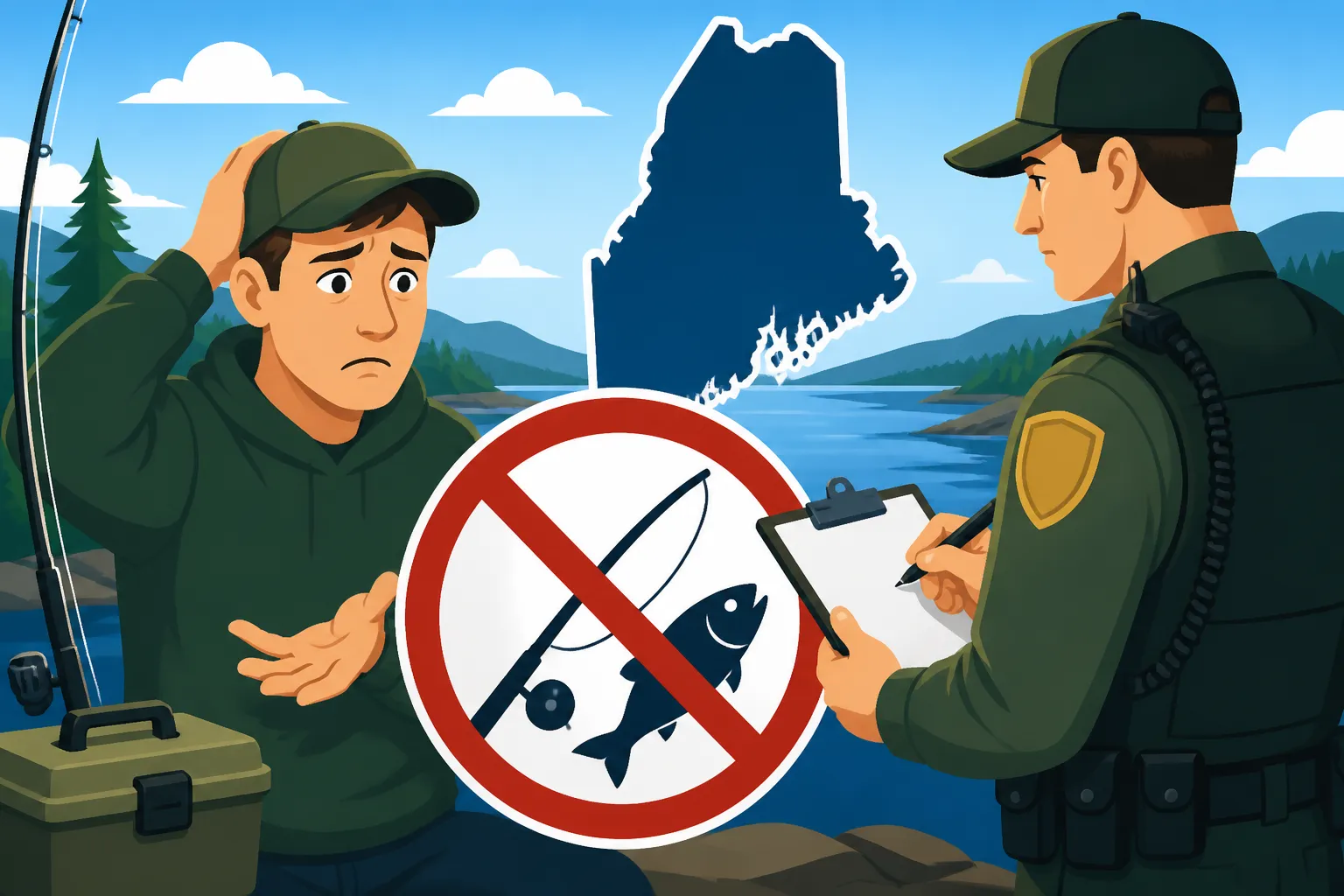
Imagine this scenario: you're casting your line into a beautiful Maine lake, lost in the tranquility of the moment. Suddenly, a boat pulls alongside, or a figure emerges from the treeline, sporting the distinct uniform of a Maine game warden. Their approach is usually polite but firm. The first thing they'll ask for is your fishing license and identification. This is where the truth comes out – either you proudly present your valid license, or you fess up to not having one.
If you can't produce a valid license, the warden will proceed with a violation report. They'll ask for your personal information, including your name, address, and date of birth, and verify it with your ID. They'll also note the location, time, and specific details of the alleged violation. While wardens are generally understanding, their job is to enforce the law, and "I forgot it at home" or "I didn't realize I needed one" isn't a get-out-of-jail-free card. In most cases, fishing without a license is considered a civil violation in Maine. This means it's not a criminal charge that will show up on a criminal record, but it still carries significant penalties. You'll typically be issued a summons or a written warning, depending on the severity and whether you're a first-time offender or not.
The Standard Fine Structure
The most immediate and tangible consequence of fishing without a license is the monetary fine. In Maine, the penalties for this infraction can vary, but generally, a first offense for fishing without a valid license can set you back anywhere from $100 to $300, sometimes even more, depending on specific circumstances and the discretion of the warden or the court. This isn't just a slap on the wrist; it's a real financial burden that could have been easily avoided by purchasing a license for a fraction of that cost.
For example, if you're a non-resident who simply opted not to buy a license, you'll be facing a fine that far exceeds the price of a Maine Nonresident Fishing License Cost. The specific amount of the fine might also depend on whether you're cited for never having obtained a license versus simply not having it on your person. While forgetting your license at home might be met with a little more leniency, it’s still a violation. It’s important to understand that these fines are designed to deter illegal activity and help fund the conservation efforts that keep Maine's fisheries healthy and vibrant for everyone.
Beyond the Fine: Other Potential Consequences
While the monetary fine is usually the primary penalty, there can be other consequences that are equally, if not more, frustrating. For repeat offenders, the fines can increase significantly, and you might face additional penalties like mandatory court appearances. In more severe cases, especially if other violations are involved (such as exceeding Maine Fish Bag Limits Guide or using illegal methods), your fishing gear could potentially be confiscated. While gear confiscation is less common for only a "no license" violation in recreational fishing, it’s a possibility if the situation escalates or if other infractions are present.
Furthermore, a history of violations can impact your ability to obtain future fishing licenses, or it could lead to the suspension of your fishing privileges for a period. Maine takes its conservation responsibilities seriously, and those who repeatedly disregard the rules are seen as a threat to the state's natural resources. While these might sound like extreme measures, they underscore the importance of always being compliant. It's not just about avoiding a fine; it's about protecting the privilege of enjoying Maine's incredible outdoors responsibly. To learn more about broader rules, consider reading our comprehensive guide on Maine Fishing Regulations Explained.
Understanding Maine's Fishing License Requirements
Navigating the world of fishing licenses can sometimes feel a bit overwhelming, especially with different types, durations, and specific exemptions. However, understanding these basic requirements is your first line of defense against any potential fines or legal trouble. Maine's system is designed to be straightforward, ensuring that everyone who enjoys its waters contributes to their preservation.
Who Needs a License and Who is Exempt?
The general rule of thumb in Maine is that if you are 16 years of age or older and intend to fish in Maine's inland waters (lakes, ponds, rivers, and streams), you need a valid fishing license. This applies to both residents and non-residents, though the costs and some specific rules differ. For example, a Maine Resident Fishing License Cost will be less than a non-resident annual license. This is a crucial point, as many visitors mistakenly believe their home state license is valid here, which it is not.
However, there are some important exemptions that are worth knowing. Children under 16 years of age do not need a license to fish in Maine. This is a wonderful initiative to encourage young people to get out and experience fishing without an initial barrier. There are also specific exceptions for landowners fishing on their own land, or during special designated periods like Maine Free Fishing Days Guide. Additionally, certain individuals, such as resident disabled veterans, may be eligible for specific exemptions or discounted licenses. Always double-check these exemptions, as they can sometimes have specific conditions. Knowing if you qualify for Maine Fishing License Exemptions can save you both money and headaches.
Different Types of Licenses and Their Costs
Maine offers a variety of fishing licenses to suit different needs, whether you're a local angler who fishes year-round or a visitor just looking for a weekend adventure. The most common options include annual licenses (for both residents and non-residents), as well as short-term licenses for non-residents, such as 1-day, 3-day, 7-day, and 15-day options. These short-term licenses are incredibly popular for tourists visiting the state for a brief fishing trip and are a much more sensible choice than risking a hefty fine.
Here's a quick look at some general license types and their typical ranges (exact costs can vary slightly year to year, so always check the official IFW website for current rates):
| License Type | Resident Cost (Approx.) | Non-Resident Cost (Approx.) | Validity Period |
|---|---|---|---|
| Annual Fishing License | $25 – $30 | $45 – $70 | Calendar Year |
| 1-Day Fishing License | N/A | $15 – $20 | 1 Day Specified |
| 3-Day Fishing License | N/A | $25 – $30 | 3 Days Specified |
| 7-Day Fishing License | N/A | $40 – $45 | 7 Days Specified |
| 15-Day Fishing License | N/A | $45 – $50 | 15 Days Specified |
| Combination Hunting & Fishing | $40 – $50 | $100 – $120 | Calendar Year |
Note: These are approximate ranges. Always check the official Maine Department of Inland Fisheries and Wildlife website for the most current pricing and options, as costs can change annually.
As you can see, even a Maine 1-Day Fishing License Price for Visitors is a small investment compared to the potential fine for going without. Opting for a Maine 7-Day Nonresident License Price or even an annual license provides peace of mind and full compliance. It's always best to choose the license that best fits your fishing plans.
How to Ensure You're Always Compliant
Simply buying a license is a great first step, but ensuring you're always compliant means a little more. First and foremost, you must carry your license with you whenever you are fishing. Whether it's the physical paper copy or a digital version on your phone (Maine accepts digital licenses), make sure it's accessible. Wardens need to verify it on the spot. Leaving it in your car a mile away, or back at the camp, can still result in a citation because you can't produce it when requested.
Beyond just the license, compliance also means understanding the specific rules for the waters you're fishing. Maine has a diverse range of water bodies, each with its own set of regulations, including specific Maine Fishing Season Dates Guide, bait restrictions, and bag limits. A general statewide license allows you to fish, but it doesn't exempt you from these localized rules. Always check the current fishing law book or the IFW website for the specific body of water you intend to fish. A seasoned angler knows that half the battle is preparation, and that includes being thoroughly educated on all the regulations. For a deeper dive, check out our Maine Fishing License Guide to ensure you're covered for every fishing adventure.
Preventing a Costly Mistake: Your Best Strategies
No one sets out on a fishing trip intending to break the law. Most "no license" violations stem from forgetfulness, misunderstanding, or simply not knowing the rules. The good news is that preventing these costly mistakes is incredibly easy with a little planning and awareness. Think of it as part of your pre-fishing ritual – just like checking your tackle box, you should check your license.
Purchasing Your License: Online, In-Person, and Renewal
Getting your Maine fishing license is a straightforward process, thanks to modern conveniences. The easiest and most common way to purchase a license is online through the Maine Department of Inland Fisheries and Wildlife (IFW) website. This allows you to buy your license from the comfort of your home, print it out immediately, or save a digital copy to your phone. It's fast, efficient, and ensures you have a record of your purchase. Our guide on How to Buy a Maine Fishing License Online walks you through every step.
If you prefer a more traditional approach, or if you're already in Maine and need a license on the fly, you can purchase one in person at various authorized agents across the state. These agents include many town offices, sporting goods stores, and some convenience stores. Just look for the "Maine Inland Fisheries and Wildlife License Agent" sign. Our article on Where to Buy a Maine Fishing License In Person provides details on finding locations near popular fishing spots. Remember, annual licenses expire on December 31st each year, regardless of when you purchased them. So, if you're planning a trip early in the new year, make sure to check out Maine Fishing License Renewal Rules to get your new license ahead of time!
Double-Checking Regulations: It's More Than Just a License
Having a valid license is non-negotiable, but it’s just one piece of the regulatory puzzle. Maine's waters are diverse, and so are their rules. Many lakes, ponds, and rivers have special regulations that differ from the statewide "general law." These can include things like catch-and-release only sections, specific length limits for certain species, restrictions on certain types of bait (like live baitfish), or even specific hours for fishing.
For instance, the Maine North Zone vs South Zone Fishing Rules apply different regulations depending on geographical location. Ignorance of these localized rules can still lead to a fine, even if you have your license. Before heading to a new fishing spot, make it a habit to consult the latest Maine fishing law book, available online or at license agents. You can also use the IFW website to search for specific water bodies and their regulations. Understanding these nuances, such as Maine Landlocked Salmon Bag Limits or Maine Bass Fishing Limits by Zone, is crucial for a truly compliant and enjoyable fishing experience.
What to Do If You Realize You've Made a Mistake
Let's say you're out on the water, and it hits you: your license is sitting on the kitchen counter. Or perhaps, worse, you realize you never actually bought one. What should you do?
- If you forgot it: If you have a valid license but simply left it behind, the best course of action is to try and rectify it immediately. If you have a digital copy on your phone, present that. If not, consider if you can quickly return to retrieve it or have someone bring it to you, especially if you haven't started fishing yet. If a warden approaches, be honest and explain the situation. They may be more lenient with a warning if they can verify your license through their system, but it's not guaranteed.
- If you never bought one: If you genuinely don't have a license, and you realize this before a warden approaches, your best bet is to immediately stop fishing and purchase one. You can often do this on your smartphone via the IFW website if you have cell service. If you're caught fishing without ever having purchased a license, there's little recourse except to accept the consequences. Self-reporting is generally not a common practice in this scenario, but being cooperative and truthful with a warden if approached is always advisable. Don't try to hide your activity or make excuses. The potential fine for Fishing Without a License in Maine is a strong motivator to ensure you're legal before your line ever touches the water.
Disclaimer
The information provided in this guide is for general informational purposes only and does not constitute legal advice. Fishing regulations in Maine can change, and specific situations may vary. Always consult the most current official regulations published by the Maine Department of Inland Fisheries and Wildlife (IFW) or speak with a licensed authority for the most accurate and up-to-date information.