Is a Togue Technically a Char?
If you've spent any time fishing Maine's vast lakes and ponds, you've undoubtedly heard the term "togue." It's a local favorite, rolled off the tongue as naturally as "wicked good" or "Ayuh." But for anglers new to the state, or even seasoned veterans who just haven't dug into the scientific classifications, a common question often bubbles up: is a togue technically a char? It's a fantastic question, one that delves into the fascinating world of fish taxonomy and helps us better understand the incredible species we pursue here in the Pine Tree State. This guide will untangle the nomenclature, clear up the confusion, and give you the definitive answer, helping you appreciate Maine's cold-water species even more.
Unpacking the "Togue" Term in Maine
The first step to understanding whether a togue is a char is to understand what we mean when we say "togue" here in Maine. It's a deeply ingrained local term, but it often stands in for a more widely recognized scientific name, leading to a bit of a linguistic mystery for those not from around here.
What Mainers Call Togue
Ask almost any local angler in Maine about lake trout, and chances are they'll correct you or at least clarify that "we call 'em togue around here." This isn't just a quaint regionalism; it's a part of our fishing heritage, passed down through generations. The term "togue" is unique to New England, particularly Maine, and it refers specifically to the large, predatory fish that thrive in our deepest, coldest lakes. It evokes images of vast, clear waters like Moosehead or Sebago, and the thrill of battling a powerful, often massive, fish from the depths. This local vernacular is something we cherish, but it undeniably contributes to the confusion when trying to place the fish within a global scientific context.
The Scientific Name: Salvelinus namaycush
While "togue" rolls off the tongue, the universal scientific name for this magnificent fish is Salvelinus namaycush. This is the species name recognized by biologists, fisheries managers, and anglers worldwide. Salvelinus is the genus, grouping together fish with similar fundamental characteristics, and namaycush is the specific epithet for the lake trout. Knowing this scientific name is the key to unlocking the char mystery, as that first part, Salvelinus, is a dead giveaway. Without this shared scientific language, discussions about fish species can become a real tangle, especially when traveling or reading about fishing in other regions. It's like calling a specific type of car by its local nickname instead of its make and model; both are valid, but one is universally understood.
Why the Local Name Matters (and Confuses)
The persistence of the local term "togue" is a beautiful testament to Maine's rich fishing culture, but it can certainly be a source of confusion. Imagine a new angler from, say, Minnesota, where they exclusively refer to Salvelinus namaycush as "lake trout." When they come to Maine and hear everyone talking about "togue," they might assume it's an entirely different species, or perhaps a hybrid unique to our waters. This isn't just an academic exercise; it can impact how people research fishing techniques, identify fish, and even understand Maine Fish Bag Limits Guide or Maine Togue and Lake Trout Limits. The local name is a point of pride, but it also creates a linguistic barrier that this guide aims to bridge by clarifying the scientific facts behind the beloved Maine togue.
The Char Family: Salvelinus
To definitively answer whether a togue is a char, we need to understand what defines a "char" in the first place. This takes us into the fascinating realm of fish classification, specifically the genus Salvelinus, which is where our Maine togue finds its true home.
What Defines a Char?
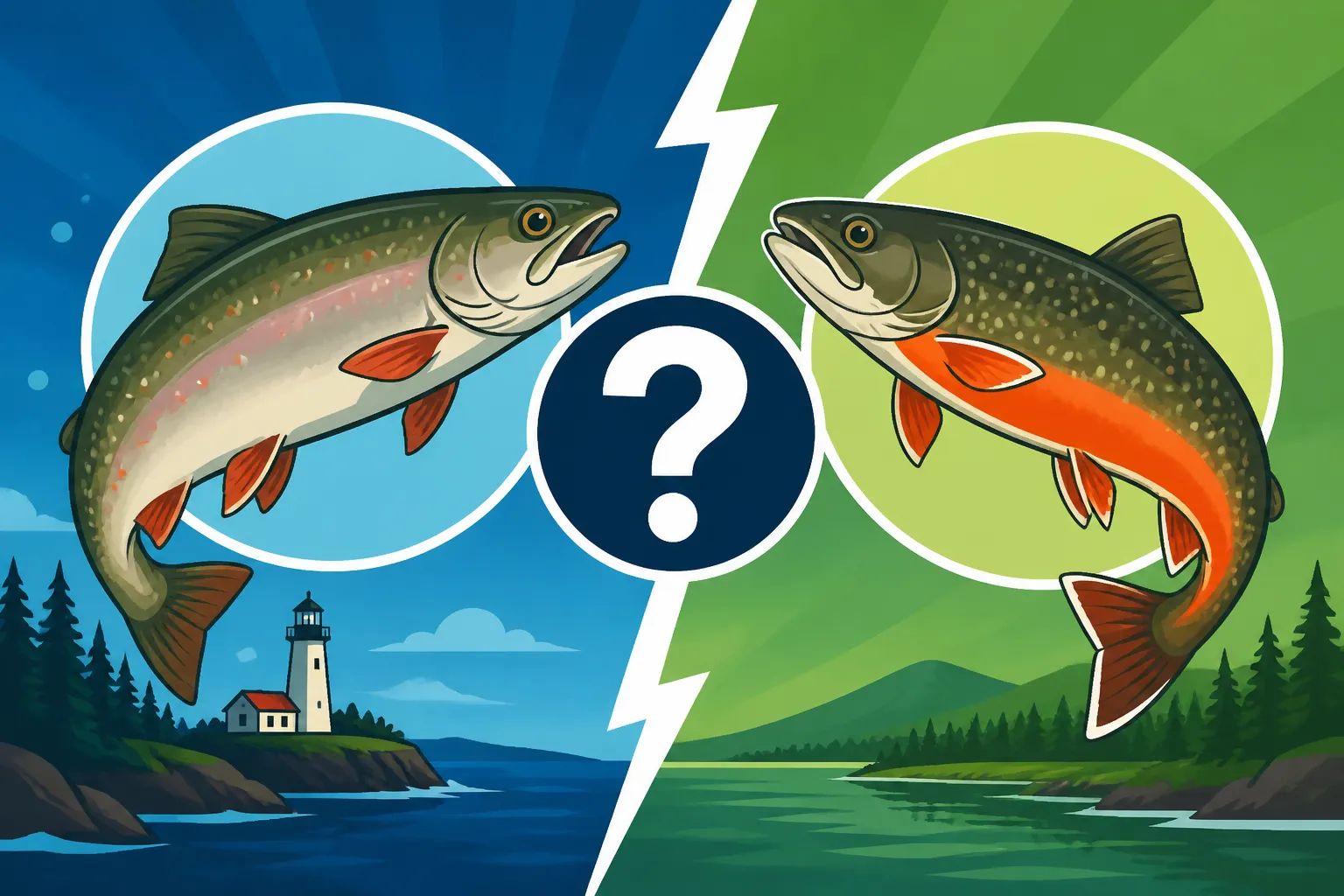
Biologically speaking, char belong to the genus Salvelinus, which is part of the salmon family (Salmonidae). What sets them apart from "true trout" (which typically belong to the Oncorhynchus or Salmo genera) are several distinct characteristics. For one, char generally have smaller scales than trout, often so small they feel smooth to the touch. Their coloration is also a strong indicator: char typically have light spots on a darker background (think white, yellow, or red spots on a darker green, brown, or black body), whereas true trout tend to have darker spots on a lighter background. Another subtle but important difference lies in their teeth; char often have teeth on the roof of their mouth (vomer), but they are usually smaller and less developed than in many true trout. These aren't just arbitrary distinctions; they reflect millions of years of evolutionary divergence, leading to species uniquely adapted to colder, often more pristine waters.
Famous Char Relatives Around the World
The Salvelinus genus is a diverse and hardy group, populating cold-water systems across the Northern Hemisphere. Our Maine togue (Salvelinus namaycush) is just one famous member. Perhaps the most widely known char is the Arctic Char (Salvelinus alpinus), which thrives in frigid northern waters and is prized for its culinary qualities and challenging fight. Then, there's the venerable Brook Trout (Salvelinus fontinalis), Maine's state fish, beloved by fly anglers and found in countless cold, clear streams and ponds. Other members include the Dolly Varden (Salvelinus malma) and Bull Trout (Salvelinus confluentus) in western North America. Each of these species, despite their different names and local distinctions, shares the fundamental characteristics that define them as char, from their distinctive spot patterns to their preference for cold, oxygen-rich environments. The diversity within this single genus is truly remarkable, showcasing nature's ability to adapt.
Key Differences from True Trout (Oncorhynchus and Salmo)
Understanding what makes a char a char often helps when contrasting them with "true trout," such as rainbows (Oncorhynchus mykiss), browns (Salmo trutta), or cutthroats (Oncorhynchus clarkii). As mentioned, the most obvious visual cue is the spotting pattern: char boast light spots on a dark body, while true trout typically have dark spots on a lighter body. Take a Brook Trout, for example, with its vibrant red spots surrounded by blue halos—a classic char pattern. Compare that to a Brown Trout, covered in dark spots, often with red or orange halos, on a golden or olive background. Scales also differ; true trout generally have larger, more easily discernable scales. Genetically, these groups diverged a long time ago, adapting to slightly different ecological niches. While all are members of the salmon family, their distinct evolutionary paths have given them unique traits, influencing everything from their preferred habitats to their spawning behaviors. Knowing these differences can make you a more discerning angler and help you with Maine Fish Species Identification Guide.
So, Is a Togue Technically a Char? The Definitive Answer
After exploring the unique local name and the broader scientific family, we can now land on the definitive answer to our central question. It's a clear-cut case in the world of fish taxonomy.
The Unequivocal "Yes"
Without a doubt, yes, a togue is technically a char. The scientific name for the togue, Salvelinus namaycush, places it firmly within the genus Salvelinus, which is the scientific classification for all char species. So, when you're battling a powerful togue in the depths of Moosehead Lake, you're actually fighting a type of char. This isn't just a quirky fact; it’s a fundamental biological truth. The local name, while cherished and widely used, simply refers to one specific species within the larger char family. It’s important for us as anglers to appreciate both the rich cultural heritage of our local terms and the precise scientific language that allows for universal understanding.
Understanding the Nomenclature
The confusion often arises because the term "trout" is used so broadly in common language. Many people use "trout" as a general descriptor for any freshwater fish that resembles a trout, regardless of its precise scientific classification. However, in scientific circles, "char" and "true trout" (like rainbow or brown trout) are distinct groups. The word "trout" itself isn't a strict scientific term; it's a common name that covers several different genera within the family Salmonidae. By understanding that "togue" is a common name for a species whose scientific name is Salvelinus namaycush, and that Salvelinus is the char genus, the picture becomes perfectly clear. It’s less about one being "more" of a trout than the other, and more about accurate grouping based on shared evolutionary history and biological characteristics.
Visual Cues: How to Tell a Char from a Trout
For the keen-eyed angler, knowing these distinctions can be quite rewarding. When you pull a fish from the water, you can often tell if it's a char or a true trout by looking for these tell-tale signs:
- Spots: This is usually the easiest identifier. Char (like togue and brook trout) have light spots (white, yellow, red) on a darker background. True trout (like brown and rainbow trout) generally have dark spots (black, brown) on a lighter background.
- Scales: Run your hand along the fish. Char often feel very smooth because their scales are incredibly small and embedded, sometimes almost imperceptible. True trout have larger, more easily visible scales.
- Coloration: While highly variable depending on habitat and diet, char often exhibit vibrant reds, oranges, or blues, especially during spawning season. Brook trout's vermiculations (worm-like patterns) on their backs are also unique to char.
- Tail Shape: While not exclusive, many char species (especially togue) can have a deeply forked tail, particularly as they grow larger. This is less common in true trout.
By keeping these characteristics in mind, you can quickly classify your catch and gain a deeper appreciation for the fish you're holding. It's an excellent skill to hone, especially when navigating Maine Fish Species Identification Guide.
Why This Distinction Matters to Maine Anglers
Beyond satisfying intellectual curiosity, knowing that a togue is a char actually offers practical benefits for anglers targeting these majestic fish in Maine. This scientific classification isn't just for biologists; it subtly influences everything from where we look for them to how we approach their conservation.
Habitat and Behavior
Understanding that togue are char immediately clues you into their preferences. Char, as a group, are typically associated with cold, highly oxygenated waters. This explains why togue are almost exclusively found in Maine's deeper, colder lakes and rarely in warmer, shallower ponds. They are incredibly sensitive to water temperature, often retreating to the deepest parts of lakes during summer when surface waters warm up. Knowing this informs your approach: you'll use different Trolling Techniques for Maine Lakes at different depths, target specific structures, and generally fish cooler seasons or times of day for optimal success. Their char lineage means they prefer the pristine, often oligotrophic (nutrient-poor, high oxygen) conditions that characterize many of Maine's iconic glacial lakes, a trait shared by their brook trout cousins in smaller, cold streams.
Fishing Techniques and Gear
The char distinction also subtly guides our choice of Best Lures for Maine Open Water Fishing and tactics. Char, including togue, often feed on a variety of prey, but in deep lakes, they're typically piscivorous, meaning they eat other fish like smelt. Their ambush predator nature and preference for colder water mean techniques like deep trolling with large spoons, stickbaits, or baitfish imitations, or vertical jigging with heavy jigs, become highly effective. For ice fishing, setting up tip-ups with live bait is a classic and successful method for togue. These techniques differ significantly from, say, fly fishing for brown trout in a shallow river or casting spinnerbaits for largemouth bass in a weedy pond. Understanding the biological nature of a char, particularly its feeding habits and preferred depths, empowers you to choose the right gear and strategy, increasing your chances of a successful outing.
Conservation and Management
Finally, recognizing togue as char plays a crucial role in conservation and fisheries management in Maine. Species within the Salvelinus genus, particularly those native to northern climes, often face unique challenges, including habitat degradation, climate change impacts on water temperature, and competition from non-native species. Maine's Department of Inland Fisheries and Wildlife (MDIFW) develops specific management plans tailored to the needs of togue and other char species, acknowledging their cold-water requirements and their slower growth rates compared to some other fish. For instance, regulations like Maine Togue and Lake Trout Limits or Maine Landlocked Salmon Bag Limits are carefully crafted based on the biology of these fish. By understanding their char identity, anglers can better appreciate the importance of these conservation efforts, support responsible fishing practices like Catch and Release Best Practices in Maine, and contribute to the long-term health of Maine's valuable cold-water fisheries.
Other Char Species You Might Encounter in Maine (or Wish You Could!)
While the togue holds a special place in the hearts of Maine anglers, it's not the only char species you might find, or learn about, in our beautiful state. The Salvelinus genus has other remarkable representatives that are either native residents or fascinating relatives.
The Beloved Brook Trout
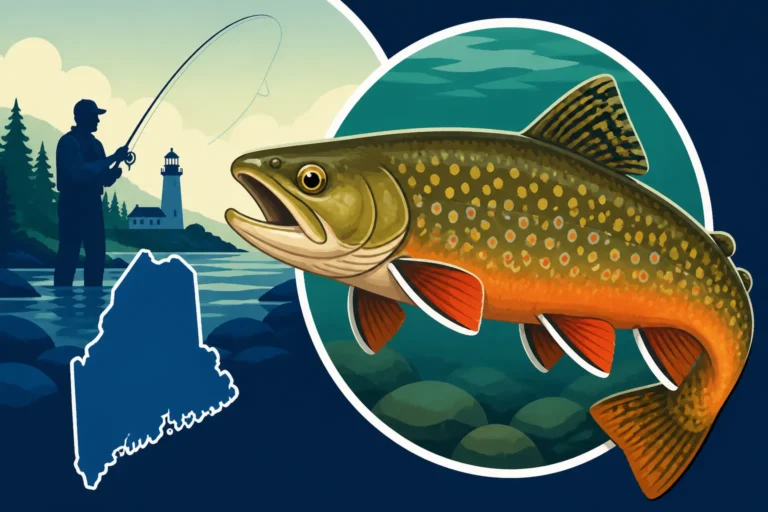
When we talk about char in Maine, we absolutely have to mention the Brook Trout (Salvelinus fontinalis). Not only is it Maine's state fish, but it's also a true char! Like the togue, the brook trout exhibits those classic char characteristics: light, often vibrant red, spots with blue halos on a darker, olive-green body, and incredibly small scales. Maine is renowned for its wild brook trout fisheries, especially in the remote ponds and streams of the North Woods. These fish thrive in the same cold, clean, oxygen-rich waters that togue prefer, albeit in different aquatic environments. Chasing wild brook trout in a pristine Maine stream is a quintessential experience, and knowing they are indeed char only adds to their mystique and their biological connection to their much larger togue cousins. You can learn more about them and their habitats in Brook Trout Fishing in Maine.
The Elusive Arctic Char
While not widely distributed in Maine, the Arctic Char (Salvelinus alpinus) is another fascinating member of the char family. Globally, it's one of the most northerly distributed freshwater fish. In Maine, there are only a handful of lakes that support remnant populations of what are often referred to as "blueback trout" or "Sunapee trout," which are thought to be distinct forms of Arctic Char. These populations are incredibly rare and protected, remnants of glacial periods. They share the char traits of light spots on a dark background and a preference for cold, deep water. While most anglers won't specifically target Arctic Char in Maine due to their scarcity and protected status, understanding their existence here highlights the incredible diversity and historical significance of the Salvelinus genus within our waters.
"Salters" and Sea-Run Brook Trout
A particularly intriguing aspect of the char family is the phenomenon of "salters" or sea-run brook trout. While not a distinct species, these are brook trout (Salvelinus fontinalis) that spend part of their lives in saltwater estuaries or coastal waters before returning to freshwater to spawn. This anadromous behavior is more commonly associated with salmon, but some populations of brook trout in Maine and other parts of New England exhibit this life history. These "salters" often grow larger and develop a silvery sheen while in saltwater, before reverting to their vibrant freshwater coloration. They still retain all the genetic and physical characteristics of char. Fishing for sea-run brook trout is a specialized pursuit, offering a unique challenge and a glimpse into the adaptability of these remarkable char. It's a reminder that the lines between freshwater and saltwater can sometimes blur for these tough, cold-water specialists.
Here's a quick comparison of some common Maine fish and their classification:
| Feature | Togue (Lake Trout) (Salvelinus namaycush) | Brook Trout (Salvelinus fontinalis) | Brown Trout (Salmo trutta) | Rainbow Trout (Oncorhynchus mykiss) |
|---|---|---|---|---|
| Genus | Salvelinus (Char) | Salvelinus (Char) | Salmo (True Trout) | Oncorhynchus (True Trout) |
| Spotting | Light spots on dark body | Light spots on dark body | Dark spots on lighter body | Dark spots on lighter body |
| Scales | Very small, smooth feel | Very small, smooth feel | Larger, more noticeable | Larger, more noticeable |
| Tail Shape | Often deeply forked | Slightly forked to square | Square to slightly forked | Square to slightly forked |
| Preferred Water | Deep, cold, clear lakes | Cold, clean streams & ponds | Cooler rivers & lakes, adaptable | Cold, clear rivers & lakes |
| Local Maine Name | Togue | Brookie | Brownie (though less common than "trout") | Rainbow (though less common than "trout") |
As you can see, the biological differences are quite clear when laid out side-by-side. The next time you're out on a Maine lake, and someone refers to a "togue," you can confidently acknowledge its local name while knowing its true scientific identity as a char. This knowledge not only enhances your understanding of our incredible fisheries but also deepens your appreciation for the complex natural world we get to be a part of. Happy fishing!
Disclaimer
This article is for general informational purposes only and does not constitute professional advice. Laws, prices and regulations vary by location and change over time. Consult a qualified professional for guidance on your specific situation.