Why Is Atlantic Salmon Fishing Restricted in Maine?
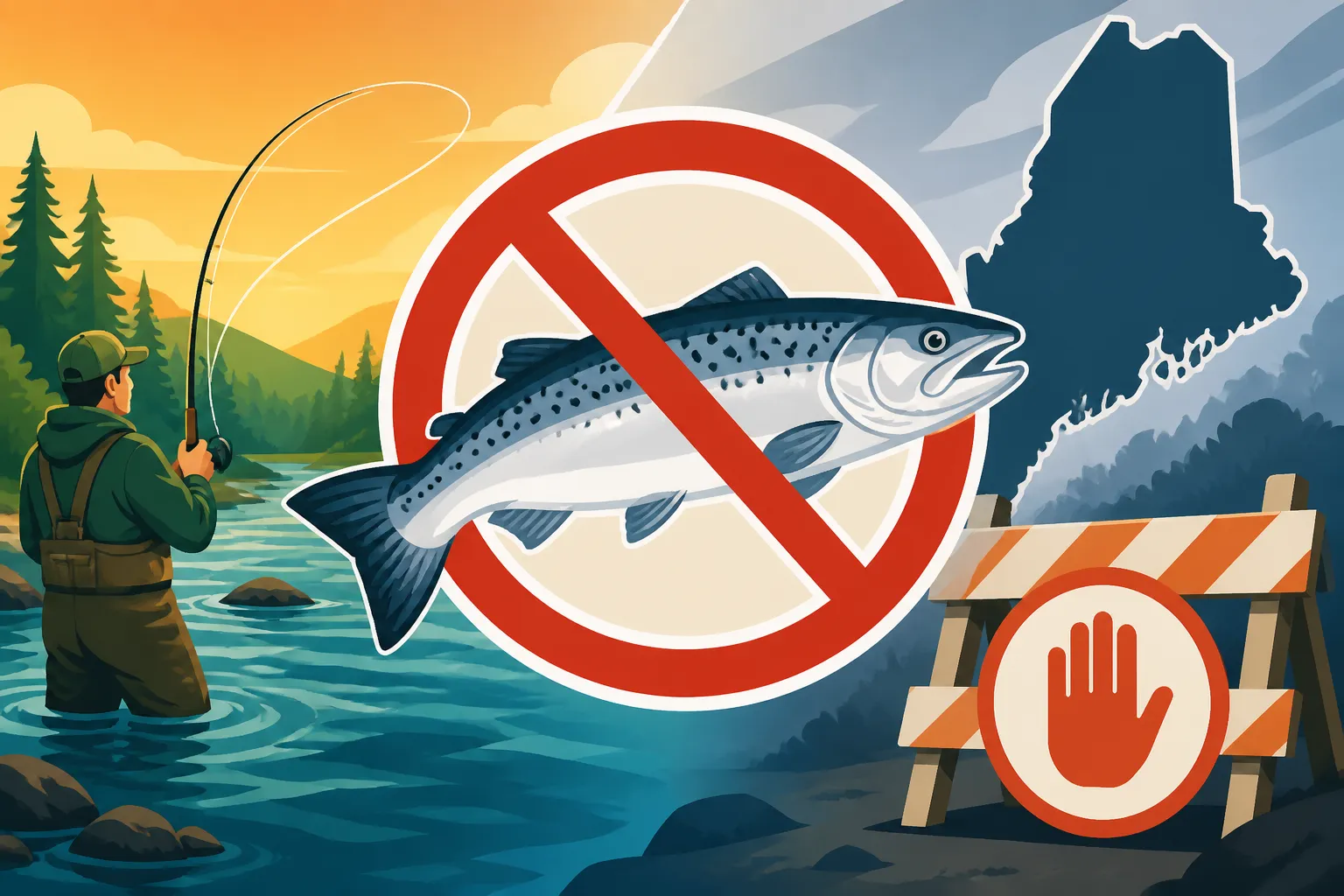
It’s a truly unique feeling, standing on the banks of a beautiful Maine river, rod in hand, and knowing that while incredible fish swim below, there's one majestic species you absolutely cannot target or keep: the wild Atlantic Salmon. For many anglers, especially those new to our beautiful state or who remember a different era, this restriction can be perplexing and even a little disheartening. You see these magnificent fish, and your angler's instinct kicks in, but the law is clear. This guide is here to shed light on why Atlantic Salmon fishing is so heavily restricted in Maine, diving into their history, the challenges they face, and the critical conservation efforts in place.
The Historical Context: A Vanishing Icon
To truly understand why Atlantic Salmon fishing is restricted in Maine, we need to look back at their once-dominant presence and the unfortunate path that led to their decline. These fish aren't just any species; they are deeply woven into the fabric of Maine's natural heritage.
The Grandeur of Wild Atlantic Salmon
Imagine a time, not so long ago in the grand scheme of things, when Atlantic Salmon runs were so abundant that they literally darkened the rivers. Early settlers and Native American tribes depended on these seasonal migrations for sustenance. These weren't just fish; they were a cornerstone of the ecosystem and a vital resource. Wild Atlantic Salmon are anadromous, meaning they're born in freshwater rivers, migrate to the ocean to grow, and then return to those same rivers to spawn. This incredible journey requires pristine, connected habitats, from cold, oxygen-rich spawning grounds to unobstructed migratory routes and healthy ocean feeding grounds. They were known for their power, their beauty, and their sheer numbers. When they were plentiful, catching one was a rite of passage, a true testament to the abundance of nature.
Early Decline and Human Impact
Unfortunately, the very resources that made Maine attractive for settlement and industry also contributed to the salmon's downfall. As the state developed, rivers were dammed to power mills and transport logs, effectively blocking the salmon's migratory paths to their spawning grounds. Pollution from industrial waste and agricultural runoff further degraded water quality, making many stretches uninhabitable. Overfishing, both commercial and recreational, also played a significant role, as did logging practices that scoured riverbanks and led to increased water temperatures and sedimentation. It was a perfect storm of human activity that, piece by piece, chipped away at the Atlantic Salmon's ability to survive and reproduce. By the late 20th century, the once-teeming runs were a mere shadow of their former glory, with wild populations teetering on the brink. This historical context is vital for understanding the extreme measures now needed to protect them.
Conservation Efforts and Legal Protections
Recognizing the dire situation, significant efforts have been made, and continue to be made, to protect and restore wild Atlantic Salmon in Maine. These efforts aren't just wishes; they're backed by powerful legal frameworks and dedicated organizations.
Endangered Species Act Listing
One of the most significant protective measures for Atlantic Salmon in Maine was their listing under the federal Endangered Species Act (ESA). This isn't a small thing; it's a declaration that a species is in danger of extinction throughout all or a significant portion of its range. For wild Atlantic Salmon, specifically those populations in eight distinct river systems in Maine, this listing brought substantial protections. It prohibits their "take" (which includes harassment, harm, pursuit, hunting, shooting, wounding, killing, trapping, capturing, or collecting) and mandates the development of recovery plans. This federal protection is the primary reason you cannot legally fish for or keep wild Atlantic Salmon in these rivers. The goal is to give these fragile populations every possible chance to recover without additional pressure from angling. You might find guides on Maine Fishing Regulations Explained or Maine Fishing Laws for Beginners that touch on these strict rules.
State and Federal Collaboration
The recovery of wild Atlantic Salmon is a monumental task, far too large for any single entity. In Maine, there's a strong collaboration between state and federal agencies, along with numerous non-profit conservation groups. The Maine Department of Inland Fisheries and Wildlife (MDIFW) works closely with the U.S. Fish and Wildlife Service (USFWS) and the National Oceanic and Atmospheric Administration (NOAA) Fisheries. This partnership coordinates everything from habitat restoration projects, like dam removals and fish passage improvements, to monitoring populations and enforcing regulations. For instance, projects to install fishways or remove obsolete dams on rivers like the Penobscot have been critical to opening up vast stretches of historical spawning habitat. It's a testament to long-term commitment and the understanding that these efforts will take decades to bear fruit.
Habitat Restoration and Stocking Programs
Beyond legal protections, tangible action on the ground is paramount. Habitat restoration efforts are a huge part of the puzzle. This includes removing or modifying dams that block migration, restoring riparian zones (the land adjacent to rivers) to stabilize banks and provide shade, and improving water quality by reducing pollution sources. These efforts aim to make the rivers hospitable for salmon to return and spawn naturally. In conjunction with habitat work, stocking programs also play a role, although the ultimate goal is always to restore self-sustaining wild populations. Hatchery-raised Atlantic Salmon are released into rivers to supplement the dwindling numbers, providing a "bridge" population while habitats recover. However, even these hatchery fish are often subject to strict regulations, sometimes catch-and-release only, to ensure that the gene pool of the truly wild fish is not compromised and to maintain the overall integrity of the recovery effort. If you're interested in similar fish populations, you might want to read about Maine Atlantic Salmon Restoration Efforts.
The Restrictions: What Anglers Need to Know
For the everyday angler, the practical implications of these conservation efforts are paramount. It means understanding exactly what you can and cannot do when it comes to Atlantic Salmon.
The "Catch and Release Only" Mandate
In nearly all waters where wild Atlantic Salmon are present in Maine, fishing for them is strictly catch-and-release only, and often, even targeting them is discouraged. This isn't just a suggestion; it's a legal requirement. If you happen to hook an Atlantic Salmon while fishing for other species like brook trout or smallmouth bass, you must release it immediately, carefully, and unharmed. The emphasis is on minimizing stress and ensuring the fish has the best possible chance of survival. This means using appropriate gear (like single, barbless hooks, when possible), handling the fish minimally with wet hands, and keeping it in the water as much as possible. Taking an Atlantic Salmon out of the water for a photo, or worse, attempting to keep one, can result in significant fines and legal penalties. Understanding Maine Fishing License Guide and Maine Fishing Regulations Explained will always be your first line of defense against accidental violations.
Designated Wild Salmon Rivers
The core of the restrictions applies to specific river systems identified as critical habitat for these endangered populations. While a comprehensive list is typically found in the annual Maine fishing law book, generally speaking, these are rivers that historically supported significant Atlantic Salmon runs and where current restoration efforts are concentrated. This includes segments of the Penobscot River watershed, the Kennebec River, the Sheepscot River, and several other coastal rivers in Eastern Maine. Anglers fishing in these areas must be particularly vigilant about species identification. It's not enough to say you didn't know; the responsibility falls on the angler to understand the regulations of the waters they are fishing. Always check the most current regulations for the specific river or stream you plan to fish. Resources like the official Maine Department of Inland Fisheries and Wildlife website are invaluable, and often, local tackle shops will have the printed law books available.
Distinguishing Wild from Hatchery Salmon
One of the trickier aspects for anglers is knowing whether the salmon they've hooked is a wild fish or a hatchery-raised one, especially since hatchery fish might be part of stocking programs. While both are subject to strict catch-and-release rules in most protected waters, understanding the difference is key to the overall conservation effort. Wild Atlantic Salmon typically exhibit pristine fins, especially the dorsal and adipose fins, which are usually perfect and unclipped. Hatchery fish, on the other hand, are often marked, most commonly by having their adipose fin (the small, fleshy fin between the dorsal and tail fin) clipped. This fin clip is a permanent mark from when they were juveniles in the hatchery, designed to help biologists and anglers identify them. You might also notice subtle differences in coloration and body shape; wild fish tend to be sleeker and more vibrant.
Here’s a quick visual guide to help you distinguish:
| Feature | Wild Atlantic Salmon | Hatchery Atlantic Salmon |
|---|---|---|
| Adipose Fin | Intact, perfect, typically unclipped | Often clipped or absent (a small scar remains) |
| Pectoral/Pelvic Fins | Perfect, rounded, full, often unblemished | Can be slightly worn or frayed from tank life |
| Coloration | Vibrant, natural tones, distinct spots | Can sometimes appear duller or less defined |
| Body Shape | Sleek, streamlined, powerful looking | May appear slightly more robust or "blocky" |
| Snout | Can be slightly more pointed | Often appears slightly blunter |
If you're ever in doubt, treat the fish as if it's a wild Atlantic Salmon and release it immediately and carefully. It's always better to err on the side of caution. Good resources like laminated fish identification guides (you can find many on Amazon) can be incredibly helpful when you're out on the water.
The Path Forward: Hope for Future Generations
The restrictions on Atlantic Salmon fishing in Maine are not meant to punish anglers, but to ensure a future where these iconic fish can once again thrive. It's a long road, but there is genuine hope.
The Role of Anglers in Conservation
Anglers are often the first line of defense and the most passionate advocates for healthy fisheries. For Atlantic Salmon, your role is crucial. Beyond strictly adhering to catch-and-release regulations, you can contribute in many ways. Practicing proper catch-and-release techniques minimizes harm to incidentally caught salmon, ensuring they survive to spawn. Supporting conservation organizations that work on habitat restoration, advocating for strong environmental policies, and educating fellow anglers about the importance of these restrictions all make a difference. Every fish released, every piece of trash removed from a riverbank, and every dollar contributed to conservation helps build a brighter future for these magnificent creatures. This stewardship is part of what makes Maine's angling community so special. If you want to dive deeper into ethical fishing, consider checking out Catch and Release Best Practices in Maine.
Monitoring Progress and Adapting Strategies
The effort to restore Atlantic Salmon is ongoing, dynamic, and constantly adapting. Scientists and conservationists are continuously monitoring populations, assessing habitat health, and evaluating the effectiveness of different strategies. This means that regulations can and do change. What was true five years ago might be slightly different today. For instance, some rivers might see renewed stocking efforts, while others might focus more on dam removal as populations show signs of recovery. Staying informed by regularly checking the MDIFW regulations, reading scientific updates, and engaging with local conservation groups is important for any angler who cares about the future of Maine's fisheries. The hope is that one day, perhaps many generations from now, wild Atlantic Salmon will return in numbers great enough to allow for some form of sustainable recreational fishing, but for now, the priority remains their full recovery. Your patience and respect for these regulations are vital contributions to that long-term vision.
Disclaimer
This article is for general informational purposes only and does not constitute professional advice. Laws, prices and regulations vary by location and change over time. Consult a qualified professional for guidance on your specific situation.