Best Brook Trout Water in the Allagash Wilderness Waterway
The allure of wild brook trout, with their vibrant colors and feisty spirit, often draws anglers to the most remote corners of Maine. But finding truly untouched, thriving brook trout water can feel like searching for a needle in a haystack, especially when so many accessible spots face heavy pressure. Thankfully, the legendary Allagash Wilderness Waterway stands as a testament to Maine's wild heart, offering pristine habitats where native brookies flourish. This guide will lead you through the best waters within the Allagash, ensuring your quest for these magnificent fish is nothing short of epic.
Unveiling the Allagash Wilderness Waterway's Trout Haven
The Allagash Wilderness Waterway (AWW) isn't just a place; it's an experience. Stretching for 92 miles through the remote North Woods of Maine, this ribbon of lakes, ponds, rivers, and streams offers an unparalleled opportunity to connect with nature and pursue some of the finest brook trout fishing in the eastern United States. What makes it so special for brookies? It's a combination of factors – cold, clean water, diverse habitat, limited access, and a strong commitment to conservation that keeps these fisheries healthy and vibrant.
Why the Allagash is Prime Brook Trout Territory
Imagine crystal-clear waters, shaded by towering pines and fed by countless springs, flowing uninterrupted for miles. This is the essence of the Allagash. Brook trout, being a species that thrives in cold, highly oxygenated water, find their ideal home here. The entire waterway, from its headwaters in Telos and Chamberlain Lakes down to the confluence with the Saint John River, maintains water temperatures that are perfect for their survival and growth, even during the warmest summer months.
Furthermore, the remote nature of the Allagash means fewer anglers and less pressure on the fish populations compared to more easily accessible lakes and rivers. This allows brook trout to grow larger and exhibit more natural behaviors. The habitat diversity is also key: you'll find everything from deep lake sections and slow-moving deadwaters to riffles, rapids, and tiny feeder streams. Each provides different advantages for the trout, offering ample spawning grounds, feeding lanes, and protection from predators. These native populations are self-sustaining, a true rarity in today's fishing world, and represent a living legacy of Maine's wild heritage.
Understanding the Allagash's Unique Ecosystem
The Allagash ecosystem is a delicate balance, and understanding it is crucial for successful and responsible fishing. The waterway is largely fed by natural springs and snowmelt, maintaining its cool temperatures. The extensive forest cover along its banks helps regulate water temperature by providing shade and preventing excessive warming. This dense woodland also contributes to the rich insect life, which forms the primary food source for brook trout. Mayflies, caddisflies, stoneflies, and various terrestrial insects provide a constant buffet throughout the open water season.
Beyond insects, smaller fish like smelt and minnows are also present in the larger lake sections, offering a high-protein diet for bigger brook trout. The substrate of the river and lake bottoms, often gravel and cobble, provides excellent spawning habitat. During the fall, mature brook trout migrate to these shallow, gravelly areas to lay their eggs. Respecting these natural processes, especially during spawning season, is paramount to ensuring the long-term health of the Allagash's brook trout populations.
Top Spots for Brook Trout in the Allagash
While the entire Allagash Wilderness Waterway holds brook trout, some areas are particularly renowned for their consistent action and potential for larger fish. Knowing these prime locations can significantly enhance your chances of a memorable trip.
Headwaters and Upper Reaches
The headwaters of the Allagash, particularly the chain of lakes that form its beginning, are truly exceptional.
- Chamberlain Lake and Telos Lake: These large, deep lakes are connected and represent the true starting point of the waterway. While they are known for landlocked salmon and lake trout (togue), their shallower coves and feeder streams are fantastic for brook trout. Focus on inlets where cold water streams flow in, especially early in the season or during cooler weather. Trolling small spoons or streamers along drop-offs where brookies might be transitioning from deeper water can be very effective. Finding areas with submerged structure or weed beds near current can also yield good results.
- Eagle Lake: Downstream from Chamberlain, Eagle Lake is another gem. Its vast size means there's plenty of water to explore, but target the smaller bays, the mouths of feeder creeks, and the transition zones where the lake narrows into river-like sections. The thoroughfares connecting these lakes often concentrate fish, making them prime spots for drifting or slow trolling. The challenge here is the sheer size of the water, but with patience and a good map, you can find incredible solitude and fishing.
- Churchill Lake: Known for its rugged beauty, Churchill Lake offers excellent brook trout fishing, especially in its shallower sections and around the many small islands. It also serves as a crucial point for accessing the famous Chase Rapids, a major highlight of any Allagash canoe trip. The moving water around the rapids can hold hungry brookies, though caution is advised when navigating.
For those considering a fully planned adventure to maximize their chances in these remote spots, platforms like FishingBooker can connect you with experienced Registered Maine Guides who specialize in Allagash expeditions, providing local knowledge and safe passage.
The River Sections and Deadwaters
As the Allagash River flows north, it alternates between slow-moving "deadwater" stretches and exciting rapids. Both offer distinct brook trout opportunities.
- Thoroughfares and Deadwaters: These calmer sections, such as those above Round Pond or between Long Lake and Umsaskis Lake, are often overlooked but can be incredibly productive. Brook trout will hold in the deeper pools, under cut banks, and near any submerged structure. Drifting with worms or casting small spinners and dry flies can work wonders here. Look for subtle current seams or areas where the river widens and slows, providing ample cover and feeding opportunities. These peaceful sections are perfect for a quiet afternoon of fly fishing, offering a chance to truly soak in the wilderness.
- Rapids and Riffles: While navigating rapids requires skill and a proper canoe, the pools and eddies immediately below them are prime feeding grounds for brook trout. The aerated water and concentrated food sources make these spots irresistible. Using streamers or nymphs that imitate baitfish or aquatic insects can be very effective in these faster currents. Areas like Chase Rapids or the more modest riffles downstream offer fantastic opportunities for energetic trout that are used to fighting strong currents. Always prioritize safety when fishing near rapids.
Ponds and Tributaries
Some of the most rewarding brook trout fishing can be found by venturing slightly off the main thoroughfare into the myriad of smaller ponds and feeder streams. These hidden gems often hold wilder, less pressured fish.
- Remote Ponds: The Allagash region is dotted with countless small ponds, many requiring a short hike or bushwhack to access. These ponds are typically spring-fed and often hold exclusively brook trout. They are ideal for float tubing or shore casting. The fish here may not always be giants, but their wildness and the pristine setting make every catch special. Check a detailed map and consider consulting a local guide before attempting to find these truly secluded spots. Many of these ponds are part of the broader system that keeps the main waterway healthy. For more on these, see our guide on Best Remote Ponds for Brook Trout in Northern Maine.
- Feeder Streams: Don't overlook the small brooks and streams that flow into the Allagash lakes and river. These can be incredible nurseries for young trout and often hold surprisingly large individuals, especially during cooler periods or after a rain. Small streams require a delicate approach, often involving stealthy casting with a short rod or even just a long line. Walk slowly, observe the water, and target deeper pools, undercut banks, and log jams.
To give you a clearer picture, here's a quick comparison of different Allagash fishing zones:
| Zone Type | Primary Fishing Method | Typical Brook Trout Size | Accessibility (Effort) | Best Time of Year | Special Considerations |
|---|---|---|---|---|---|
| Upper Lakes | Trolling, Casting | Medium to Large | Moderate (Canoe/Boat) | Spring, Fall | Shared with salmon/togue; focus on inlets/shallower areas |
| River Deadwaters | Fly Fishing, Spin | Small to Medium | Easy (Canoe/Drift) | Early Summer, Fall | Stealth is key; look for structure and current seams |
| River Rapids/Riffles | Streamers, Nymphs | Medium, Strong Fighters | High (Canoe skill) | Spring, Summer | Safety first; fish below rapids in eddies |
| Small Ponds | Fly Fishing, Spin | Small to Medium, Wild | High (Hike/Bushwhack) | Summer | Secluded, pristine; often require significant effort to reach |
| Feeder Streams | Small Rod, Hand Line | Small to Medium | Moderate to High | Spring, Fall | Delicate approach; target pools and cover |
Essential Techniques and Planning for Allagash Brook Trout
Fishing the Allagash is a unique adventure, and coming prepared with the right techniques and gear is crucial for a successful trip. It's not just about catching fish; it's about embracing the wilderness experience responsibly.
Recommended Fishing Methods
For brook trout in the Allagash, versatility is your friend, but fly fishing often shines.
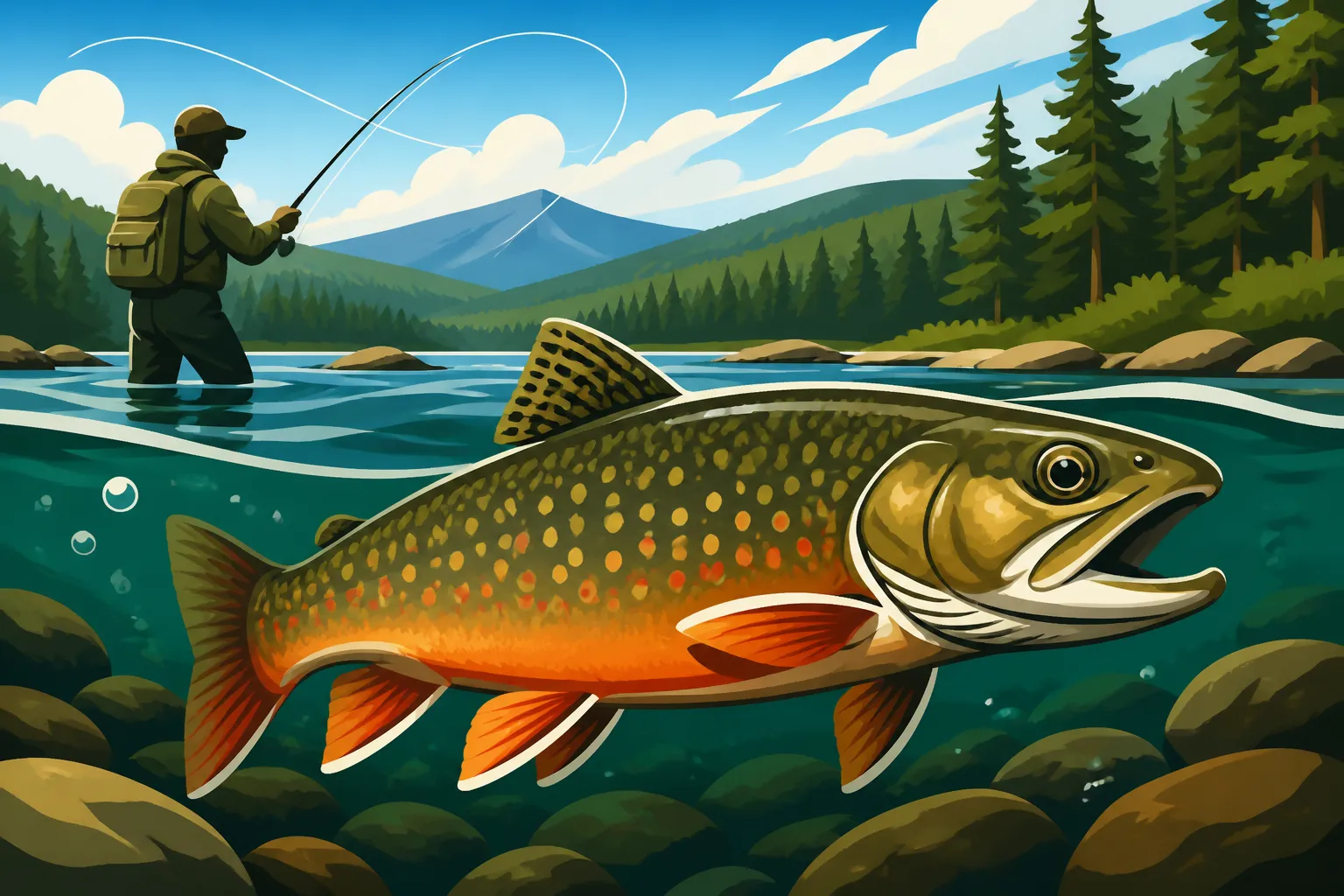
- Fly Fishing: This is arguably the most rewarding method for Allagash brook trout.
- Dry Flies: During hatches, especially in the deadwaters or calmer sections of the river, nothing beats the excitement of a brook trout rising to a dry fly. Popular patterns include Parachute Adams, Elk Hair Caddis, and various stimulators. Focus on accurate casting and a natural drift. Early mornings and evenings are often prime for dry fly action.
- Nymphs: When fish aren't rising, nymphs are your go-to. Patterns like Pheasant Tail, Hare's Ear, and Prince Nymphs fished under an indicator or tight-lined can be incredibly effective in deeper pools and riffles. Adjust your weight and drift to match the water depth and current speed. For specific fly choices, refer to our guide on Fly Selection for Brook Trout.
- Streamers: For larger brook trout, particularly in the lakes or faster river sections, streamers are deadly. Patterns that imitate smelt or sculpins (e.g., Gray Ghost, Black Ghost, Muddler Minnow) can entice aggressive strikes. Strip them slowly or jig them through deeper water.
- Light Spinning Tackle: If fly fishing isn't your forte or conditions call for it, light spinning gear is perfectly acceptable and highly effective.
- Spinners: Small inline spinners (e.g., Mepps, Panther Martin) in silver, gold, or brass with a touch of red or orange are perennial brook trout favorites. Cast them upstream and retrieve slowly, allowing the current to impart action.
- Spoons: Tiny casting spoons (e.g., Little Cleo, Dardevle) can work well in lakes and deeper river sections, especially when retrieved erratically to mimic a wounded baitfish.
- Worms/Bait: While artificials are preferred by many, a simple worm or small minnow under a bobber can be very effective, especially for more passive fish or beginners. Always check local regulations, as bait restrictions can apply in certain waters. Our guide on Maine Open Water Fishing Techniques Guide provides more general advice.
Gear and Preparation
A trip to the Allagash Wilderness Waterway requires thoughtful preparation. This isn't a place where you can just pop into a tackle shop if you forget something.
- Rods and Reels: For fly fishing, a 3-weight to 5-weight rod, 7.5 to 9 feet long, is ideal. Pair it with a matching reel and a floating line, along with a few sinking tip lines for streamers. For spinning, a lightweight rod (5-6 feet, ultralight to light power) with a matching reel spooled with 4-6 lb test monofilament or fluorocarbon is perfect.
- Watercraft: The quintessential Allagash experience is a canoe trip. A durable, stable canoe (like those from Old Town or Wenonah) is essential. If you're targeting specific lake sections, a small motorboat (where allowed) can extend your range. Kayaks can also be used but offer less carrying capacity.
- Camping Gear: You'll be camping at designated campsites along the waterway. Bring reliable tents, sleeping bags, cooking equipment, and a good cooler. A water filter or purification tablets are non-negotiable.
- Navigation: A detailed map of the Allagash Wilderness Waterway (such as those from DeLorme or the Maine Geological Survey) and a compass are absolute musts. A GPS device or a reliable GPS app on your phone (with downloaded offline maps) can be a great backup, but never rely solely on electronics.
- Safety Equipment: Always carry a comprehensive first-aid kit, a whistle, a headlamp, and a fire starter. A personal flotation device (PFD) is required and should be worn while on the water. Be aware of varying cell service, which can be spotty to non-existent.
- Insect Protection: Maine's North Woods are legendary for their biting insects, especially black flies and mosquitoes, from late spring through mid-summer. Pack plenty of bug spray with DEET or picaridin, and consider a head net and insect-repellent clothing.
- Permits and Fees: The Allagash Wilderness Waterway requires permits and fees for overnight stays. Be sure to obtain these in advance. For detailed information on what permits you might need, check out our guide on Fishing Permits Needed for the Allagash Wilderness Waterway.
When planning your adventure, you might consider reaching out to a Maine Registered Guide listed on sites like FishingBooker to help arrange all the logistics, from gear to permits, ensuring a smooth and safe trip.
Navigating the Waterway
A typical Allagash trip involves canoeing and portaging. Understanding the flow and the portage points is key to a successful journey.
- Canoeing and Current: The river sections vary in current, from swift rapids to slow deadwaters. Always scout rapids before attempting to run them, or choose to portage around them. There are designated portage trails, some with specialized carts for canoes.
- Campsites: The waterway has numerous well-maintained campsites, often equipped with a fire ring and a privvy. These are first-come, first-served, so plan to arrive early to secure a desirable spot, especially during peak season.
- Getting There: Access to the Allagash typically involves driving on private logging roads, which require extreme caution due to active logging truck traffic. Access points like Chamberlain Bridge or Telos Landing are common starting points.
Conservation and Respecting the Wilderness
The Allagash Wilderness Waterway is a special place, and its continued health depends on the respectful actions of every visitor. Practicing Leave No Trace principles and adhering to specific regulations are not just good ideas; they are essential.
Catch and Release Ethics
For wild brook trout in a pristine environment like the Allagash, catch and release is highly encouraged, if not mandatory in some sections. These fish are a precious resource, and minimizing stress on them ensures they can reproduce and thrive for future generations.
- Barbless Hooks: Crimp down the barbs on all your hooks. This makes hook removal quick and easy, greatly reducing injury to the fish.
- Minimize Handling: Try to keep the fish in the water as much as possible. If you must handle it, do so with wet hands and support its body horizontally. Avoid squeezing or touching its gills.
- Quick Release: Have your camera ready (if you're taking a photo) and your pliers/hemostat handy for a swift release. Get the fish back into the water as quickly as possible.
- Revive the Fish: If a fish seems sluggish, hold it gently in the current until it regains its strength and swims away on its own. For more detailed advice, refer to our guide on Catch and Release Best Practices in Maine.
Leave No Trace Principles
The Allagash is a designated wilderness waterway, and as such, it deserves the utmost respect.
- Plan Ahead and Prepare: Know the regulations, anticipate conditions, and pack accordingly. Inform someone of your itinerary.
- Travel and Camp on Durable Surfaces: Stick to established trails and campsites. Avoid creating new ones.
- Dispose of Waste Properly: Pack out everything you pack in, including all trash, food scraps, and even toilet paper. "If you pack it in, pack it out" is the mantra.
- Leave What You Find: Do not disturb natural objects, historical artifacts, or wildlife.
- Minimize Campfire Impacts: Use established fire rings. Keep fires small and burn all wood to ash. Ensure fires are completely out before leaving.
- Respect Wildlife: Observe from a distance. Never feed animals. Store food properly to prevent attracting wildlife.
- Be Considerate of Other Visitors: Maintain quiet in camp, keep voices low, and allow others to enjoy their wilderness experience.
Regulations Specific to the Allagash
While the general Maine Fishing Regulations Explained apply, the Allagash Wilderness Waterway often has specific rules to protect its unique fisheries.
- Special Regulations: Always consult the most current Maine Open Water Fishing Laws book or the Maine Department of Inland Fisheries and Wildlife (MDIFW) website for specific regulations pertaining to the Allagash. Certain lakes or river sections might have different bag limits, length limits, or tackle restrictions than general law waters. For instance, Brook Trout Size and Bag Limits in Maine can vary by zone.
- Lead Tackle Ban: Maine has implemented a ban on the use of lead sinkers and jigs. Ensure all your terminal tackle is lead-free to protect waterfowl and other wildlife.
- Live Bait Restrictions: While allowed in some areas, live bait is often restricted or completely banned in wilderness ponds and sensitive trout waters to prevent the introduction of invasive species. Always verify before using.
A trip to the Allagash Wilderness Waterway to chase brook trout is more than just fishing; it’s an immersion into Maine’s wild soul. With proper planning, respect for the environment, and a little perseverance, you’ll not only find incredible fishing but also create memories that will last a lifetime. So pack your bags, tune up your canoe, and get ready for an unforgettable adventure.
Disclaimer
Please remember that fishing regulations, conditions, and access can change. Always consult the latest Maine Department of Inland Fisheries and Wildlife (MDIFW) rules and local advisories before planning any fishing trip. Safety in the wilderness is paramount, and preparation is key to a successful and enjoyable experience.