How Many People Can Go on a Maine Charter Boat?
One of the most common questions I hear from folks planning a fishing trip to Maine is, "How many people can we actually bring on the charter boat?" It’s a great question, and honestly, the answer isn't always as simple as "the boat looks big enough for everyone!" Understanding passenger limits is crucial not just for booking the right trip, but for your safety and comfort on the water. This guide will help you navigate the ins and outs of charter boat capacities in Maine, so you can plan the perfect outing for your whole crew.
The Core Question: Passenger Capacity Explained for Maine Charters
When you start looking at charter boats in Maine, whether you're dreaming of reeling in stripers off the coast or battling togue in a deep lake, you'll quickly realize that passenger limits are a big deal. These aren't arbitrary numbers; they're set by strict regulations, primarily enforced by the U.S. Coast Guard, to ensure everyone's safety. It's about more than just fitting bodies on a boat; it's about having enough life jackets, proper safety equipment, and sufficient space for emergency procedures.
The "Six-Pack" Standard: What It Means for Your Trip
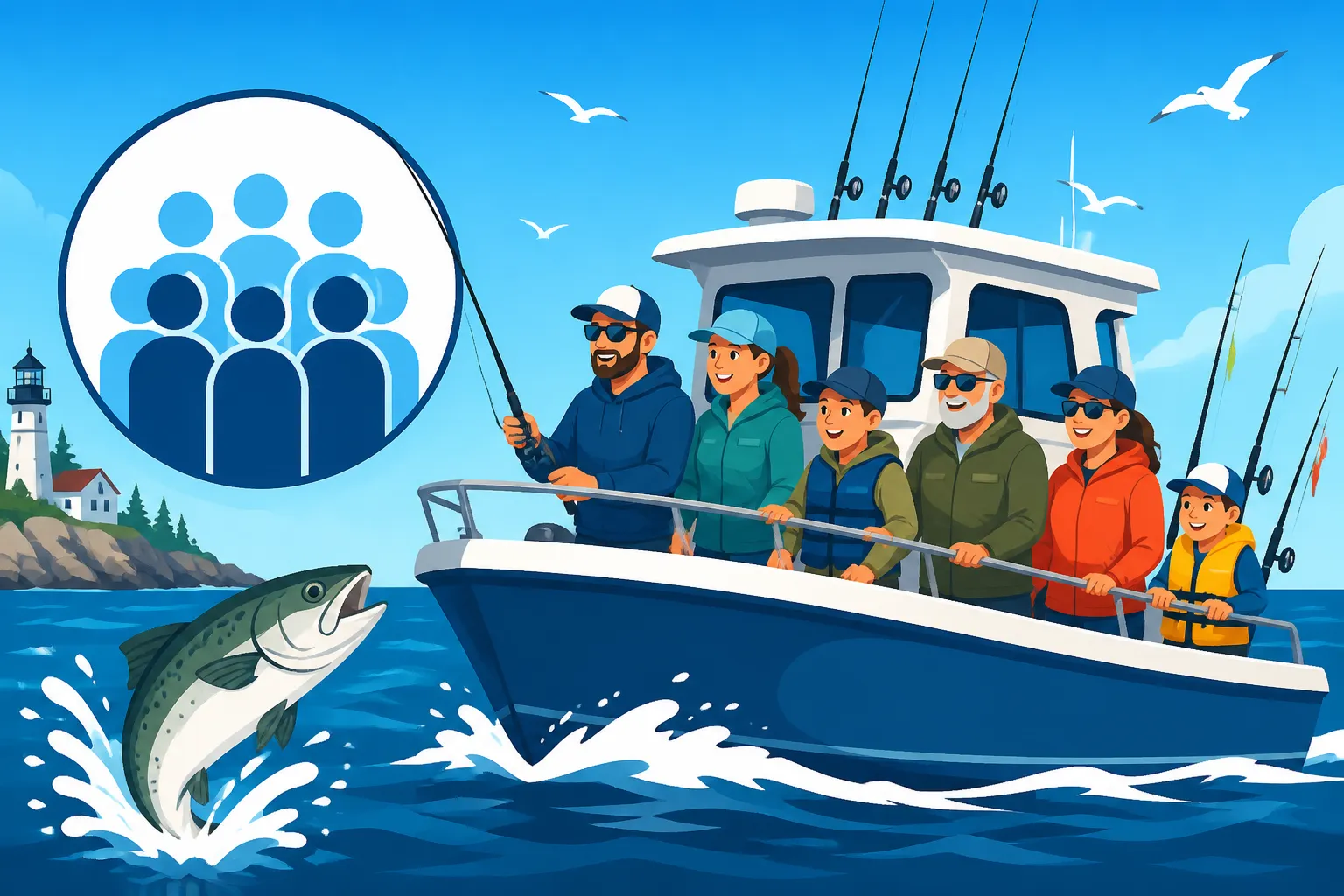
The most common type of private fishing charter you'll encounter in Maine, especially for inshore or nearshore excursions, is often referred to as a "six-pack" charter. This means the vessel is certified to carry no more than six paying passengers. It doesn't matter if the boat is a 25-foot center console or a 40-foot sportfisher, if its Coast Guard certification is for "six-pack," six is the hard limit.
This standard isn't about the boat's physical size as much as it is about the captain's license. Many captains operate under an "Operator of Uninspected Passenger Vessels" (OUPV) license, often called a "six-pack" license, which restricts them to carrying six or fewer passengers. These charters offer a more intimate experience, often allowing for more personalized attention from your captain and deckhands. It's fantastic for families or a small group of friends who want a focused fishing adventure. If you're looking for a personalized trip, these smaller, more focused charters often deliver an exceptional experience. To learn more about various trip types, check out our Maine Fishing Charters Guide.
Larger Vessels and Group Charters: Expanding Your Options
While "six-pack" charters are prevalent, Maine certainly has options for larger groups, too. If you have a party of 7, 10, or even 20 people, you'll need to seek out a charter vessel with a different kind of Coast Guard certification. These boats are typically inspected by the Coast Guard and carry a "Certificate of Inspection" (COI), which specifies a higher passenger capacity. These are often larger boats, sometimes called "head boats" or "party boats," where individuals or small groups can book a spot alongside others.
These larger vessels are often found in popular coastal areas like Portland, Boothbay Harbor, or Kennebunkport, catering to Maine Deep Sea Fishing Charters that might venture further offshore for groundfish or offer longer excursions. While they can accommodate more people, the experience differs from a private "six-pack." You'll have less individual space, and the captain's attention is divided among more anglers. However, they are a fantastic, often more budget-friendly option for getting a large group out on the water, or for solo anglers looking to join a trip.
Crew vs. Passenger: Understanding the Count
Here's a common point of confusion: who counts towards the passenger limit? Simply put, the crew does not. The U.S. Coast Guard's passenger count refers only to paying customers or guests on board. Your captain and any deckhands working the boat are considered crew members and are exempt from the passenger tally. So, if you book a "six-pack" charter, that means up to six anglers in your party, plus the captain and often a mate. This distinction is crucial because it ensures that even on a smaller boat, you'll have dedicated professionals managing the vessel and assisting with your fishing adventure, without taking up valuable fishing space from your group.
Factors Influencing a Charter's Capacity in Maine
Beyond the fundamental legal limits set by the Coast Guard, there are several practical factors that influence how many people can comfortably and effectively fish on a Maine charter boat. A boat might be certified for a certain number, but that doesn't always translate to the best experience for every single person on board, especially when you factor in gear, fishing techniques, and personal space.
Boat Size and Layout: More Than Just Regulations
A 30-foot boat certified for six passengers is not the same as a 40-foot boat certified for six passengers. The physical dimensions and layout of the deck space play a huge role in your comfort. A smaller boat might feel cramped with six adults, especially if everyone is actively fishing with rods, moving around, and managing their catch. A larger vessel, even with the same passenger limit, often provides more elbow room, dedicated seating, and sometimes even a proper head (marine toilet) and cabin space, which can make a long day on the water much more enjoyable.
Consider the amount of open deck space available for casting, reeling, and fighting fish. If you're on a crowded deck, tangles are more likely, and the overall enjoyment can diminish. When browsing options, don't just ask about the maximum capacity; inquire about the boat's overall length, beam (width), and deck layout to get a better sense of how spacious it will feel with your group.
Type of Fishing Activity: Space for Gear and Action
The kind of fishing you plan to do also significantly impacts how many people can comfortably participate. For example:
- Trolling for Landlocked Salmon or Togue: This often involves multiple lines out at various depths, and when a fish strikes, space is needed to move around the boat to fight and net the fish without lines getting tangled. Six people actively trolling on a smaller boat might feel pretty tight, especially when fish are on! For understanding specific techniques, see our guide on Trolling Techniques for Maine Lakes.
- Bottom Fishing for Groundfish: While perhaps less active than trolling, bottom fishing still requires space for each angler to drop their line, manage their bait, and reel in their catch. If everyone is dropping lines straight down, it can be manageable, but still, tangles can occur if space is limited.
- Striped Bass Fishing (Casting): If your group intends to cast lures or flies for striped bass, casting requires ample swing room. A boat that could comfortably host six people jigging might feel utterly chaotic with six people trying to cast simultaneously. If you're looking for that kind of action, check out Maine Striped Bass Fishing Techniques.
Always think about the practicalities of the fishing method and how much room each angler truly needs to operate safely and effectively.
Comfort and Personal Space: Why Fewer Can Be More
Ultimately, while a boat might be legally certified for X number of passengers, sometimes the best experience is had with fewer people. If you have a group of six, but you're all large adults with lots of gear, and you want to actively cast for hours, you might find that a "six-pack" boat, while legal, feels crowded. Reducing your group size to four or five, if possible, can dramatically improve the comfort level and reduce potential frustrations like tangled lines or bumping elbows.
When you're trying to land that trophy fish, the last thing you want is to be worried about hitting someone with your rod or having your line cross another's. More space means a more relaxed atmosphere, more personalized instruction from the captain or mate, and generally a more enjoyable day on the water. It’s a trade-off many experienced anglers consider carefully.
Practical Considerations for Booking Your Maine Fishing Charter
Booking a fishing charter in Maine should be an exciting experience, not a stressful one. Knowing the realities of passenger capacity ahead of time will help you make informed decisions and ensure your trip goes off without a hitch. Here's how to approach it.
Communicating Your Group Size Clearly
The very first step when inquiring about a charter should be to state your exact group size. Don't assume anything. Be upfront: "We have a party of seven adults," or "We're a family of two adults and three children." This allows the charter captain or booking agent to immediately tell you if they can accommodate you and suggest appropriate vessels. Trying to add an extra person last minute is often impossible due to those strict Coast Guard regulations we talked about earlier.
Many charters, especially those with smaller vessels, simply cannot make exceptions. It's a legal and safety issue, not a matter of being unaccommodating. Transparent communication from the start prevents disappointment later on.
Comparing Charter Options for Different Group Sizes
Once you know your group size, you can start comparing charters. If you have a larger group (more than six), you'll need to filter for boats that explicitly state they are certified for more than a "six-pack." Websites like FishingBooker are fantastic resources for this, as they often allow you to filter charter options by the number of passengers, showing you only the boats that can legally and comfortably accommodate your group. This saves you a lot of time and hassle.
Here’s a quick overview of how capacities might shape your choices:
| Group Size | Typical Charter Type | Experience | Cost Implications (General) |
|---|---|---|---|
| 1-6 People | "Six-Pack" Private Charter | Intimate, personalized, dedicated crew attention. Ample space for all. | Often a fixed boat rate; higher per person if fewer than 6. |
| 7-12 People | Larger Private Charter (COI vessel) | Still private, but often on a bigger boat. Less common than six-packs. | Higher fixed boat rate than six-packs, but potentially lower per person. |
| 13+ People | "Party Boat" / "Head Boat" (COI vessel) | Shared trip with other anglers. Less private, but very social. | Often a per-person rate; most economical for larger groups. |
Remember, booking in advance, especially during peak season, is always a good idea to secure the right boat for your group. Our guide on Booking a Maine Fishing Guide in Advance offers more tips on this.
The Cost Factor: How Capacity Influences Price
It's important to understand that most private fishing charters in Maine are priced per boat, not per person, up to their maximum capacity. So, whether you bring one person or six on a "six-pack" charter, the base price for that trip will likely be the same. This means if you have a smaller group, say three people, the per-person cost will be higher than if you fill the boat with six. This is because the captain still has to cover fuel, maintenance, insurance, crew wages, and their time, regardless of how many anglers are on board.
For larger groups requiring a COI vessel, the pricing structure might vary. Some might still charge a flat boat rate up to a certain number, then add a per-person fee for additional guests. Party boats or head boats almost always charge on a per-person basis. When comparing options, always confirm the pricing structure. This can help you understand the true value of a Maine Charter Fishing Cost Guide and make the most economical choice for your group size. Don't hesitate to ask for a clear breakdown of costs when you inquire. For specific price ranges, consult our article on Maine Full-Day Charter Price Range.
Common Misconceptions About Charter Boat Passenger Limits
Even with all the information out there, there are a few lingering misunderstandings that often trip people up when planning their Maine fishing charter. Let's clear those up, so you can go into your booking process with full confidence.
"My Kids Don't Count, Right?": The Strict Headcount Rule
This is perhaps the most common misconception, and it's vital to get it right for safety and legal reasons. When it comes to U.S. Coast Guard regulations for passenger vessels, every single person on board counts as a passenger, regardless of age. Yes, this includes infants, toddlers, and small children. If a charter boat is certified for a maximum of six passengers, and you have two adults and four children, that's exactly six passengers. You cannot bring an extra child in a carrier and claim they don't count.
This rule exists for safety reasons: every person needs a life jacket (even if they don't wear it constantly, one must be available and sized correctly), and the vessel's stability, emergency procedures, and rescue capacity are all calculated based on a full headcount. So, when planning a family trip, be absolutely sure to count every single member of your party, from the youngest to the oldest. If you're wondering about general rules for younger anglers, we have a helpful guide on Fishing License Age Requirements in Maine.
"Can We Just Squeeze One More On?": The Firmness of Regulations
No, you really can't. Charter captains and operators are strictly bound by their Coast Guard certification. Exceeding the stated passenger limit, even by one person, is a serious violation that can result in substantial fines for the captain, loss of their license, and even seizure of the vessel. More importantly, it compromises safety. The boat might not have enough life jackets for everyone, or its emergency protocols might be insufficient for an overloaded vessel.
A reputable captain will never "bend the rules" for an extra person, no matter how much you plead or offer extra money. They are prioritizing your safety and their livelihood. It might be disappointing if your group is seven and you find a perfect "six-pack" boat, but it's far better to find a vessel that legally and safely accommodates everyone than to put yourself and the captain in a precarious situation.
"It's a Big Boat, So It Must Hold More": Size vs. Certification
It’s easy to look at a substantial 35-foot fishing boat at the dock and assume it can take a dozen people, especially if it looks roomier than some smaller recreational boats you've seen. However, a boat's physical size doesn't automatically dictate its passenger capacity. The certification, issued by the Coast Guard, is the only thing that matters. As we discussed, a 40-foot boat could still be certified as a "six-pack" vessel if the captain operates under an OUPV license.
This certification process involves various inspections, safety equipment checks, and stability tests. So, don't rely on your visual assessment of a boat's size. Always confirm the certified passenger capacity with the charter operator directly. They'll be happy to provide this information, as it's a fundamental aspect of their operation. Remember, too, that while a charter will provide most gear, you typically don't need your own fishing license when on a registered charter, but it's always good to confirm by reviewing information like Do Maine Charter Passengers Need Their Own Fishing License?.
Disclaimer
This article is for general informational purposes only and does not constitute professional advice. Laws, prices and regulations vary by location and change over time. Consult a qualified professional for guidance on your specific situation.