Best Line Weight for Trout Fishing
One of the trickiest things about fishing for trout in Maine, especially for those beautiful, wary native brook trout, is figuring out what kind of fishing line to use. So many anglers get frustrated when they can't get a bite, or worse, they hook into a nice fish only to have their line snap because they didn't quite get the balance right. This guide is all about demystifying fishing line weight for trout in Maine, helping you understand how to choose the perfect line for every situation and increase your chances of a successful and enjoyable day on the water.
Why Line Weight Matters for Trout Fishing in Maine
You might think, "A line's a line, right? As long as it holds the fish, it's good." Oh, if only it were that simple, my friend! In the world of trout fishing, especially here in Maine where our waters can be crystal clear and our fish incredibly smart, line weight is far from a minor detail. It's often the difference between a memorable catch and a frustrating day of casting to empty water.
The Delicate Dance of Presentation
Imagine you're a brook trout, lurking in a clear, cold Maine stream, perhaps a tributary of the Kennebec River, or a small pond in the western mountains. You're constantly on the lookout for food, but you're also incredibly aware of anything out of place. Now, picture a lure or a fly drifting by. If it's attached to a thick, visible line, it's like a neon sign saying, "Hey, fish! This is a trap!" Trout, especially the larger, more experienced ones, have exceptional eyesight and are easily spooked.
Heavier line creates more drag in the water, too. This is particularly noticeable when you're fishing in currents. A heavier line can pull your bait or lure unnaturally fast or cause it to hang up where it shouldn't. Think of fly fishing—the whole art is presenting a tiny imitation of an insect as naturally as possible. A heavy, stiff monofilament line would completely ruin that delicate presentation, making your fly drag and look completely unrealistic. Even with spinning gear, a lighter line allows for a more subtle drop, a more natural flutter of a small spoon, or a slower, more enticing drift of a worm. It's all about making your offering look irresistible and, crucially, natural.
Fighting Power vs. Stealth
It’s a constant tug-of-war, isn't it? On one hand, you want a line strong enough to land that monster landlocked salmon that just hit your lure on Sebago Lake. On the other, you know that heavy line might just deter the fish from biting in the first place. This is where understanding the balance truly comes into play.
A line that's too light risks snapping when you hook into a powerful fish, especially if they make a strong run, get into snags, or you set the hook a little too enthusiastically. There's nothing worse than feeling that solid thump, fighting a beautiful fish for a moment, and then feeling the line go slack. Heartbreaking! Conversely, a line that's too heavy can make casting smaller lures or baits difficult, reducing your distance and accuracy. It also, as we discussed, significantly increases visibility and can ruin your presentation, leading to fewer bites.
For smaller, wild brook trout in tight, brushy streams, you might sacrifice a little fighting power for maximum stealth and go with a really light line, knowing you’ll have to play the fish carefully. But for aggressive lake trout, or "togue" as we call them up here, in the deep, open waters of Moosehead Lake, you might opt for a slightly heavier line that can withstand their powerful dives and the often deep-set hooks from trolling. It's about making an informed decision based on the species, the conditions, and your personal fishing style.
Understanding Different Line Types and Their Weights
Before we dive into specific recommendations, let's talk about the different types of fishing lines you'll encounter and why their characteristics matter. Each has its strengths and weaknesses, making them better suited for certain situations and species.
Monofilament, Fluorocarbon, and Braided Lines
These are your three main players in the world of fishing line. You can find all sorts of options on platforms like Amazon, but knowing what you're looking for makes all the difference.
- Monofilament (Mono) Line: This is probably what most people picture when they think of fishing line. It's made from a single strand of nylon, it's generally quite affordable, and it has a good amount of stretch.
- Pros: Its stretch acts as a shock absorber, which can be forgiving when a fish strikes hard or makes a sudden run. It's relatively easy to tie knots with, floats on water, and comes in a wide range of colors. It's often a great choice for topwater presentations or when you want some give.
- Cons: It's more visible in clear water than fluorocarbon, and its stretch can reduce sensitivity, making it harder to detect subtle bites. It also has a tendency to retain "memory," meaning it can coil up, especially on spinning reels, and can degrade over time with UV exposure. For general trout fishing in Maine, a good quality mono from 4-8 lb test is a solid all-around choice for many situations.
- Fluorocarbon (Fluoro) Line: Often considered the "stealth bomber" of fishing lines. It's denser than mono, so it sinks, and its refractive index is very close to that of water, making it nearly invisible underwater.
- Pros: Incredible invisibility, which is a huge advantage when fishing for spooky trout in clear Maine lakes and rivers. Its low stretch offers much better sensitivity, allowing you to feel even the lightest taps. It's also more abrasion-resistant than mono, which is great around rocks or submerged timber.
- Cons: It's generally more expensive than monofilament and can be a bit stiffer, sometimes making it harder to tie certain knots securely. Because it sinks, it's not ideal for all topwater presentations. Many anglers use fluorocarbon as a leader material for its invisibility, even when their main line is braided or monofilament.
- Braided Line (Braid): Made by weaving together multiple strands of synthetic fibers, creating a very strong line with almost no stretch.
- Pros: Unmatched strength-to-diameter ratio, meaning a 10 lb braid is incredibly thin compared to 10 lb mono. This allows for longer casts and more line capacity on your reel. Its zero stretch provides extreme sensitivity, letting you feel every bump and bite, and delivers powerful hooksets. It's also very durable and lasts a long time.
- Cons: It's highly visible underwater, which can be a major deterrent for trout. It can be more expensive than mono, and its thinness can dig into spools if not wound tightly. Because of its visibility, braid is almost always used with a fluorocarbon or monofilament leader when targeting trout. It also requires specific knots designed for braided lines.
Pound Test vs. Diameter
When you look at fishing line, you'll see a number followed by "lb test" – this indicates the breaking strength of the line. So, 6 lb test means the line is designed to break at 6 pounds of pressure. Simple enough, right? But there's another crucial factor: diameter.
Different line materials and manufacturing processes mean that two lines of the same pound test can have very different diameters. For example, 10 lb braided line will be significantly thinner than 10 lb monofilament. This matters immensely for trout fishing. A thinner line generally means:
- Less Visibility: A smaller diameter is harder for trout to see.
- Less Drag: In current, a thinner line offers less resistance, allowing for more natural drifts.
- Longer Casts: Less air resistance means you can cast lighter lures further.
- More Line on Your Reel: You can spool more of a thinner line onto your reel.
However, a thinner line also means less abrasion resistance and potentially a more delicate feel when handling. It's a trade-off. For trout, the general rule of thumb is to go with the lightest pound test you can comfortably fish with, which often correlates with a smaller diameter. But remember, the material type heavily influences that diameter.
Matching Line Weight to Maine Trout Species and Conditions
This is where the rubber meets the road! Knowing the characteristics of lines is one thing; applying that knowledge to the unique demands of Maine trout fishing is another. Different species, different bodies of water, and different times of year all call for slight adjustments.
Targeting Brook Trout and Brown Trout
Ah, our beloved brook trout! Maine is renowned for its brook trout fishing, especially in the cold, clear streams and remote ponds of the north woods. These fish are often wary, and presentation is paramount. For these beauties, and for their equally finicky cousins, the brown trout, lighter line is almost always better.
For stream fishing or small pond fishing for brook trout, I typically recommend a 2-pound to 4-pound test monofilament or fluorocarbon main line, or a light braid (6-10 lb) with a 2-4 pound fluorocarbon leader. A good quality 4-pound test fluorocarbon leader, in particular, offers fantastic invisibility and good abrasion resistance, which is handy when these feisty fish dive for snags. Going too heavy, say 8-pound test or more, will significantly reduce your bites, especially if you're targeting wild brook trout in clear water. Think about how a tiny dry fly on a Fly Fishing Techniques for Maine Rivers outing would look with a heavy line; it would be completely out of place!
Brown trout, while not as prevalent in all Maine waters as brook trout, often inhabit similar environments or larger rivers. They can grow quite large and put up a strong fight, so if you're specifically targeting bigger browns, you might bump up to a 4-pound to 6-pound test line. The key here remains stealth and natural presentation, particularly in the clear rivers of western Maine where these fish might hold.
Landlocked Salmon and Togue Tactics
Now, if you're heading out to tackle the powerful landlocked salmon or the deep-dwelling togue (lake trout) on one of Maine's larger lakes like Moosehead Lake or the Rangeley Lakes, you'll need a bit more muscle. These fish are generally larger, stronger, and often caught using different techniques like trolling, which can put more stress on your line.
For landlocked salmon fishing in Maine, especially when trolling or casting larger spoons and stickbaits, a 6-pound to 8-pound test monofilament or fluorocarbon line is a common choice. Many anglers opt for 10-pound test braid as their main line for its sensitivity and casting distance, paired with an 8-pound or 6-pound fluorocarbon leader. The leader provides the invisibility needed in these often-clear lakes, while the braid gives you the power and feel. When they strike, landlocked salmon are known for their spectacular aerial acrobatics and strong runs, so having a line that can absorb some of that shock is important.
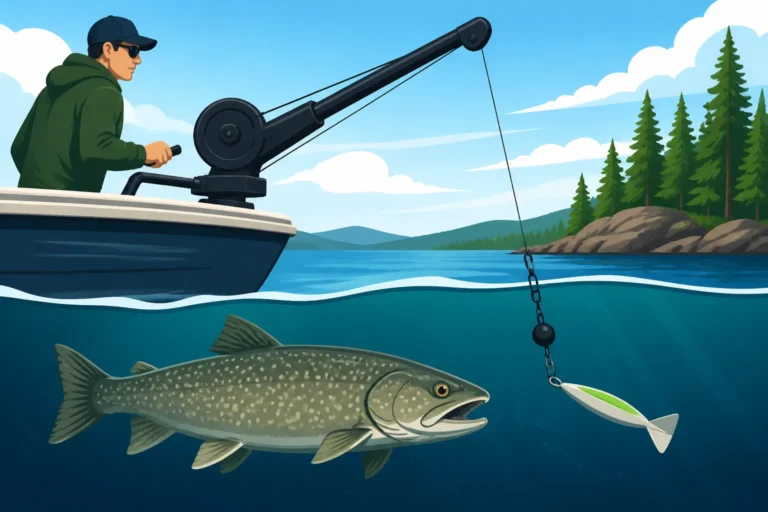
Togue (Lake Trout) fishing in Maine often involves going deep, whether jigging through the ice or trolling with downriggers in open water. Togue can grow to impressive sizes and are absolute bulldozers on the line. For them, I'd lean towards 8-pound to 12-pound test monofilament or fluorocarbon, or a 15-pound to 20-pound test braided main line with an 8-12 pound fluorocarbon leader. When you're trying to pull a 10-pound togue out of 80 feet of water, that extra pound test can make a huge difference. The thicker diameter on these lines is less of an issue because you're fishing deeper where light penetration is minimal, and the fish are often less line-shy than surface feeders. When thinking about Lake Trout and Togue Fishing in Maine, you're often looking for that combination of strength and abrasion resistance.
Water Clarity, Cover, and Lure Size
Beyond the species, the specific conditions on any given day will influence your line choice:
- Water Clarity: This is a huge factor. In extremely clear water, such as many of Maine's pristine ponds and streams, you absolutely need to go as light and invisible as possible. Fluorocarbon leaders shine here. In murkier or stained water, trout are less line-shy, and you can get away with slightly heavier or more visible lines without as much penalty.
- Cover and Structure: Are you fishing around downed trees, rocky bottom, or thick weeds? These are notorious for abrading or snagging your line. In such situations, bumping up your line strength by a pound or two, or using a more abrasion-resistant fluorocarbon leader, can prevent heartbreaking break-offs. It's a balance: you want to be light enough for bites, but strong enough to retrieve your fish from potential hazards.
- Lure/Bait Size: The line weight needs to match the weight of your lure or bait. Casting a tiny 1/32 oz trout spoon on a 10-pound test line is going to be incredibly frustrating; you won't get any distance or accuracy. Conversely, trying to cast a heavy 1/2 oz spoon on a 2-pound test line risks snapping the line on the cast. Check the recommended line weights on your rod for guidance, but generally, lighter lures demand lighter lines for optimal performance.
Here's a quick comparison of line types:
| Line Type | Key Characteristics | Pros | Cons | Best for Maine Trout Fishing (General) |
|---|---|---|---|---|
| Monofilament | Stretchy, buoyant, visible, affordable | Good shock absorption, easy to knot | High visibility, less sensitive, memory issues | General purpose, topwater, beginner-friendly. Main line with fluoro leader. |
| Fluorocarbon | Low stretch, sinks, nearly invisible, abrasion-resistant | High stealth, very sensitive, durable | Stiffer, more expensive, can be harder to knot | Leaders for all trout, main line in super clear water. |
| Braided Line | No stretch, thin diameter, strong, visible, floats | Extreme strength & sensitivity, long casts | High visibility, needs leader, can dig into spool | Main line with fluorocarbon leader for power, distance, and feel. |
Tips for Choosing and Managing Your Line
You've learned about the different lines and how to pick based on species and conditions. But there are still a few universal truths and best practices that will serve you well, no matter where you're fishing for trout in Maine.
The Right Setup for Your Rod and Reel
Your fishing line isn't an isolated component; it's part of a system. The rod, reel, and line all need to work in harmony. Most spinning rods, especially lighter action ones suitable for trout, will have a recommended line weight range printed on the blank near the handle (e.g., "Light Action, 4-8 lb Line"). This isn't just a suggestion; it's designed to give you the best performance for casting, fighting fish, and feeling bites. Using line that's too heavy or too light for your rod can lead to poor casting, reduced sensitivity, and even damage to your gear.
When spooling your reel, fill it adequately, but don't overfill it. An overfilled spool can lead to tangles and "wind knots," especially with monofilament. Conversely, too little line will reduce your casting distance. If you're using braided line, remember to put a backing of monofilament on first. This prevents the braid from slipping on the arbor of the reel and adds a little cushioning. For light lines, a high-quality spinning reel with a smooth drag system is crucial. A jerky drag can cause light lines to snap instantly when a trout makes a sudden lunge.
Regular Inspection and Knot Tying
This might sound obvious, but it's probably the most overlooked aspect of line management. After every fishing trip, and even periodically during a long day, run your line through your fingers, feeling for nicks, abrasions, or rough spots. These weak points are accidents waiting to happen. If you find any, cut back a few feet of line and re-tie your lure or leader.
Speaking of knots, a strong, reliable knot is just as important as the line itself. A 6-pound test line is only as strong as its weakest link, and often that's a poorly tied knot. For tying line to a lure or swivel, common and effective knots include the Improved Clinch Knot or the Palomar Knot. For joining two lines, like a braid mainline to a fluorocarbon leader, the Double Uni Knot or an FG Knot are excellent choices. Don't be afraid to practice these at home. There are plenty of resources online, and mastering just a few key knots will significantly reduce lost fish. If you're looking for more details on this, our guide on Fishing Knots Every Maine Angler Should Know would be a great next read!
When to Go Lighter, When to Go Heavier
Knowing when to adjust your line weight is a sign of an experienced angler. Here are a few scenarios:
- Go Lighter When:
- Water is crystal clear: Maximize invisibility.
- Fish are finicky or pressured: Trout in heavily fished waters are warier.
- Using very small baits or lures: Achieve maximum casting distance and natural presentation.
- Conditions are calm: Less wind and current allow for delicate presentations.
- Go Heavier When:
- Fishing around heavy cover/snags: Protect against abrasion and break-offs.
- Targeting larger, more powerful fish: You need the strength to handle strong runs and deep fights.
- Water is murky or stained: Visibility is less of an issue.
- Trolling with heavier tackle: Stronger line holds up to the constant drag and potential strikes.
- Ice fishing for larger species like togue: When you're pulling a big fish up through a hole, you want a stout line.
Ultimately, choosing the best line weight for trout fishing in Maine is a journey of understanding your gear, the fish, and the environment. There's no single "perfect" answer for every scenario, but by understanding the nuances of line types and their strengths, you'll be well-equipped to make informed decisions that lead to more successful and fulfilling days on Maine's beautiful waters. And remember, always check the Maine Fishing Regulations Explained before you head out, just to be sure you're fishing legally! Learning How to Find Maine Fishing Regulations for a Specific Lake can also save you a lot of headaches.
Disclaimer
This article is for general informational purposes only and does not constitute professional advice. Laws, prices and regulations vary by location and change over time. Consult a qualified professional for guidance on your specific situation.